Are you there, God of Carnage? It's Me, Sonya
Fucking Nazis.
The Sinéad series will continue—we have three more great essays coming up before the end of August. But I wanted to write to you guys (anyone who reads this, hi) because I’m having a hard time. I was crying a lot yesterday, and I think it started when I saw posts on social media about ICE being in Bridgeport. They’ve been in Norwalk and Danbury, CT, too. Trump sent them here as pure retaliation for Connecticut announcing itself as a sanctuary state. I saw a dude in several photos with his stupid shades on and his black vest, driving a silver Nissan, and I wanted to scream at him and knock him over, and it felt like this place had been violated—because it has. I felt physically gross—which I think was hatred and anger and fear all trying to squeeze themselves out onto my skin. They were at a local brewery where I’d been to trivia night, though the owners later clarified that ICE did not at all have permission to use their parking lot as a staging area. I posted the photos and a warning in a mutual aid group I am in.
I’ve been around Nazis before, seen them lurking at punk shows, stood yelling and separated from a pathetic gaggle of them with police barriers at an anti-Nazi rally in Southie in Boston. But it probably doesn’t need to be said that what we’re living now is a different level of Nazi, because it’s the actual Fascism that has taken over this country, that actually owns the government, that has taken DC by force and occupied it. But it could be argued that that, too, has not been the first time, because at our founding the state endorsed and enforced enslavement.
It’s weird how we function amidst this. And amidst genocide and destruction and starvation in Gaza (and the mindfuck of Israel perpetrating this, even though the reason they are in this situation is because of Nazis.) How do we function? Compartmentalization, or trying to. And then there’s the whole segment of the population that is not seeing it, not feeling it, or is celebrating it. People are using the word “polarization” a lot on thinky political shows and in columns. But we’re past that. Polarization is the thing that happens to the electorate and public opinion in the years before fascism. People have been strongly divided, but the word “polarization” makes it sound like everyone just decided to be difficult and contrary. It’s a polite euphemism for the reality, which is that one half of the country has descended into a tornado of hate and delusion. And it’s not us. And it’s not about opinion any more, it’s about actions and violence. (Okay, it’s always been about the violence in this country.) So maybe polarization is always a euphemism.
Germany irretrievably will never be what it was before the Nazis took power. And in the US, it’s the same. There will be no going back to “before.” People will come up with a historical term to describe this period, and then another word like “Reconstruction” to describe the period afterward. Or maybe states will secede, who knows. It’s hard living through a period that is waiting for a name because it is especially fucked up.
It’s hard living through this. This is where we diverge. This is the fork in the road that will never be mended, just like Germany will be wrestling with what happened and what the Nazis did for as long as there is a Germany.
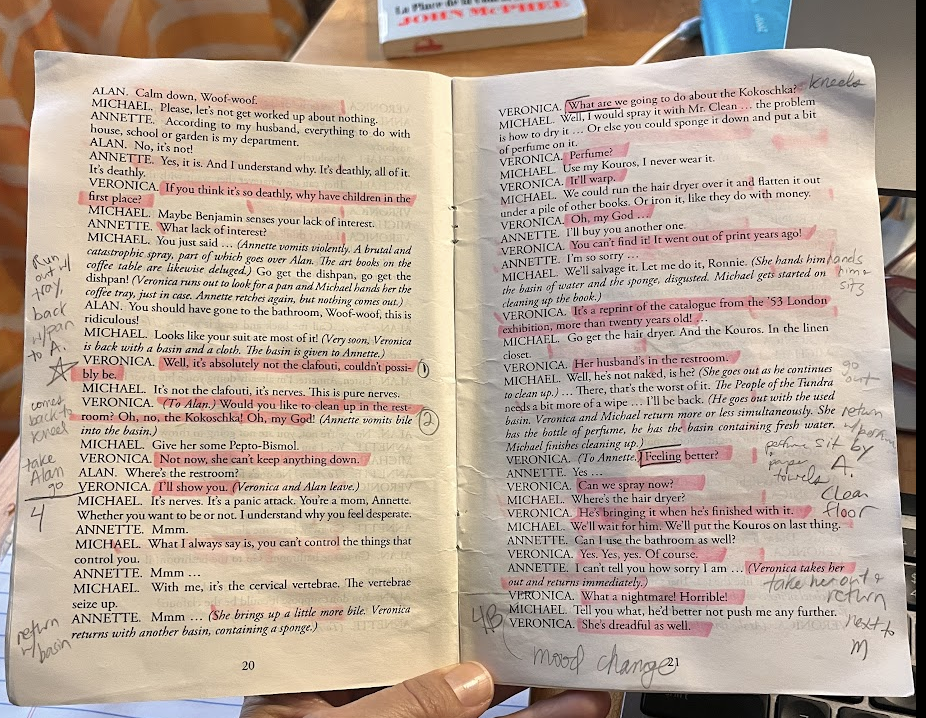
I’m also in this play (I know—why, right? It’s because I have this contrary action to anxiety where if someone asks me to do something new, I say yes.) It’s called God of Carnage by Yasima Reza, translated from the French by Christopher Hampton. It’s very difficult. I’m the character of Veronica, who spends the whole day getting yelled at and made fun of for having any kind of principals at all. It’s been on Broadway and it’s a movie. We’re doing the play the second week of Sept. at the Quick Center in Fairfield. Come and watch me get made fun of and lose my shit!
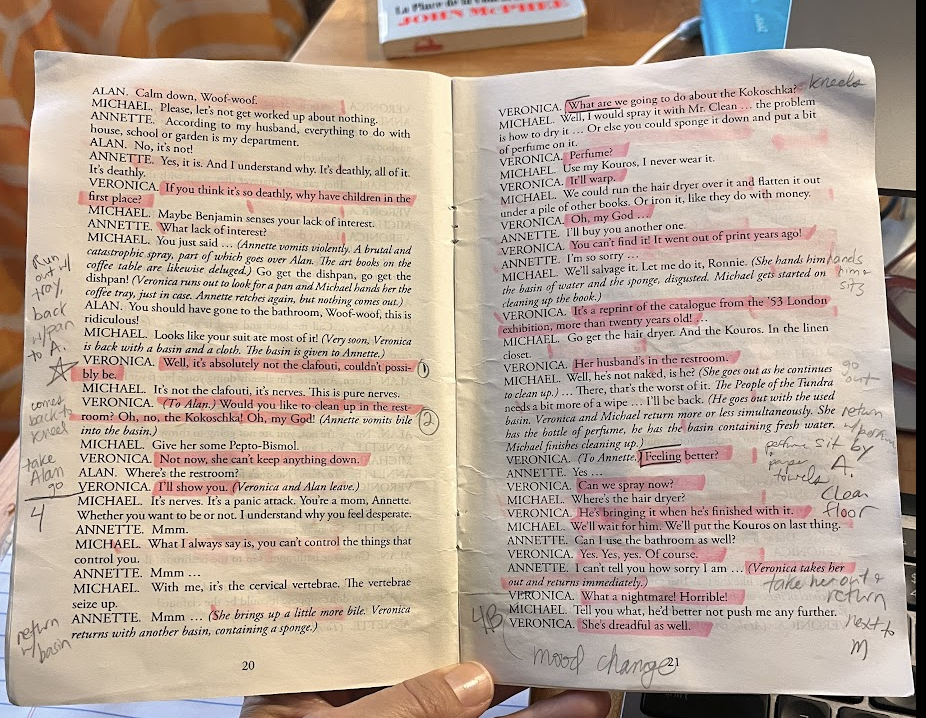
Anyway, Reza was born in 1959, grew up in France post-World War II with Jewish parents—a Hungarian mother and an Iranian father—so no matter what, her experience is in some way layered with that conflict, and with the colonialist violence that remapped large portions of the world before and between the World Wars. It’s about this notion of “Western civilization” and “savages,” and everyone in the play is an asshole. So the play is also about the moment we are living through. It’s about white people thinking they understand the world, it’s about the laughable idea that we—white people—are civilized, when the reality is that the construction of whiteness is inseparable from violence and theft and eugenics. I basically spend the whole play being gaslit, which feels very current-eventy, so I also cried after rehearsal and was at the point where I couldn’t do this goddamn play anymore. But I’ll do it.
There’s a way to read and experience the play that is an endorsement of nihilism, and it’s the same nihilism that’s staring us in the face. The nihilism of Machiavellian power, of Nazism. That’s not my read. But it’s always weird to think there may be people coming to see the play that will experience it as an endorsement of their Nazi beliefs. Art is annoying like that.
All I’m trying to say is that if you find yourself crying in the car, in the supermarket, or walking your dog, it is utterly normal and a sign of your humanity.
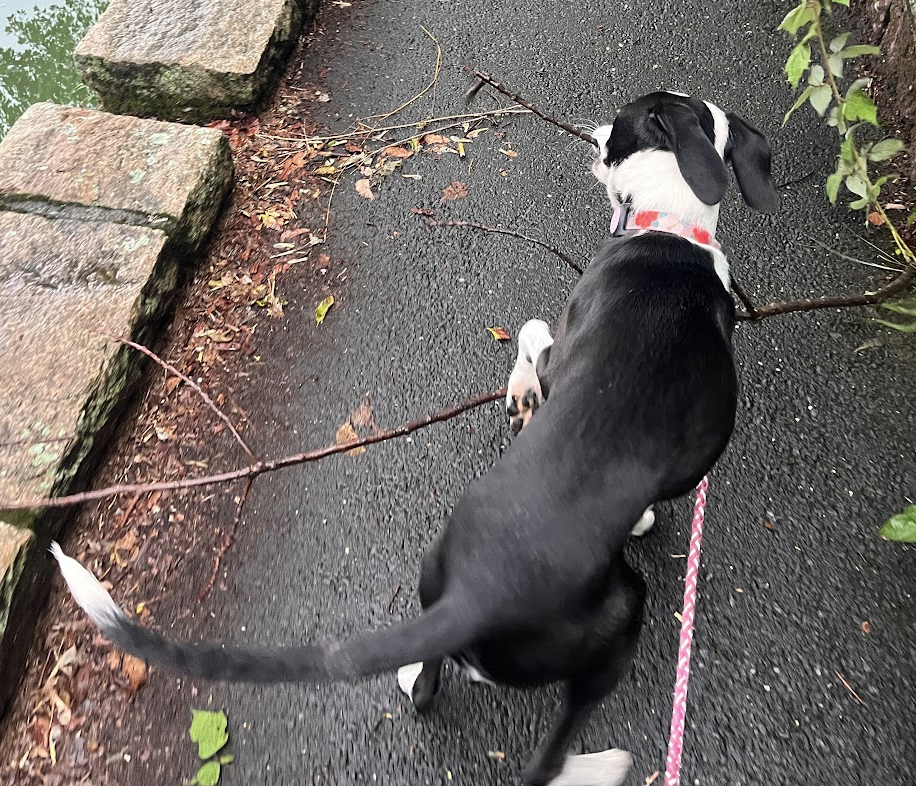
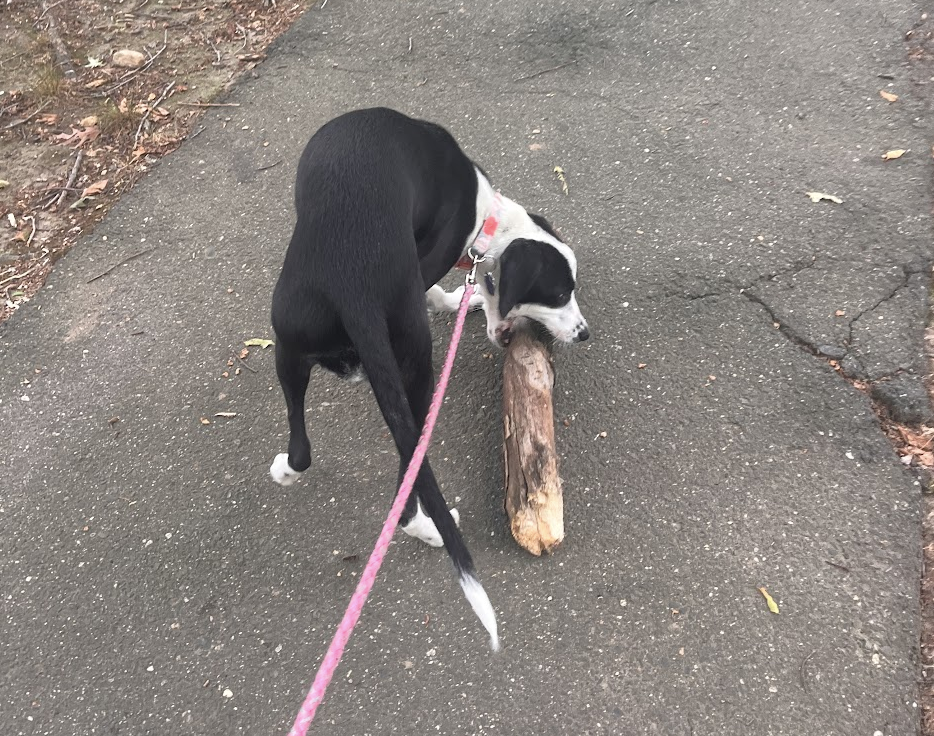
Please enjoy these photos of my little dog who likes to carry sticks that are bigger than her body.