Creative Process as Yard Sale
What a gleeful mess it is
The other day, while making coffee, I addressed a pocket of glee/anxiety bubbling up in my mind. How many book projects am I proposing/working on/finishing? I counted and was both delighted and appalled to find that the answer is FIVE.
What is wrong with me? Also, this is the kind of thing that makes me obnoxious. I can hear the clicking of the block and unfollow buttons, because this is excessive. I say this not to brag but to just talk about the mind, and our adaptations to our individual minds as makers and doers.
When people describe me as “productive,” they are fundamentally misunderstanding what it is like to live in my brain. I needed creative projects early on in my life to manage anxiety and depression, and then—AHA—I realized that the wave of unhappiness could be levee’d against with MORE. More subjects, more work. Mental illness? Probably. ADHD and the “special interests” of other conditions? I’d bet on it.
I need these long-term companions, my projects, to function. They give me joy in a rough world. It’s been especially rough with the fascism and all, so the projects have opened up hard and fast.
One of my projects is a sort of textbook-companion to the creative process, and delving into that neuroscience has been delicious, because it has confirmed and illuminated more elements of my own process, including a fact that most of us know: creative work is good for you. It’s not a sacrifice or a demon to feed, not a drug or a task-master. It is part of a happy life. And of course, if you’re an enthusiast with no sense of scale and a chaotic nature, more happy is Vegas-Palooza.
The other projects: 1. An ode to John McPhee and his writing; 2. A book about spreadsheets (I know. Trust me.); 3. An obsessive autofiction experiment about chronic pain and a Sophocles play; 4. The goddamn book on inequality in Connecticut as seen through an ecology lens that I just need to find a home for.
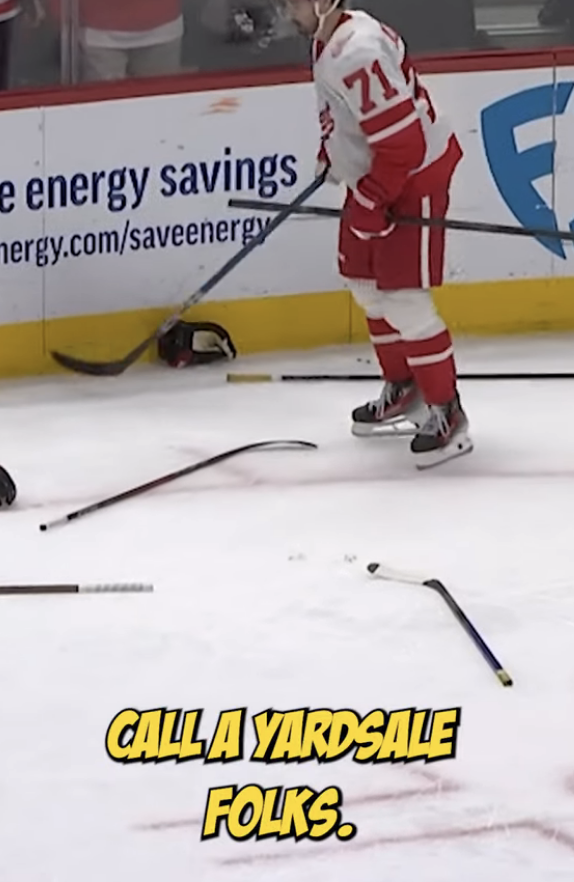
This list feels like a yard sale, not in terms of what’s for sale but in terms of its positive chaos spread out on the lawn. I can’t get away from my joy at the phrase, because I love a yard sale. Also, after I broke a bone in my foot while I was living in Georgia, I was on crutches and walked into the hallway near my office and the floor was wet, and so I went down hard and awkwardly with shit—bags, crutches, glasses, hat—flying in every direction. A student who happened to be nearby described it as a yard sale, which I think is something they say in hockey when a player gets hit or there’s a fight and equipment flies everywhere. I was sore, but I had a new phrase.
OMG it is a real thing!
Also, troubling: a hockey yard sale is probably very bad for the creative brain.
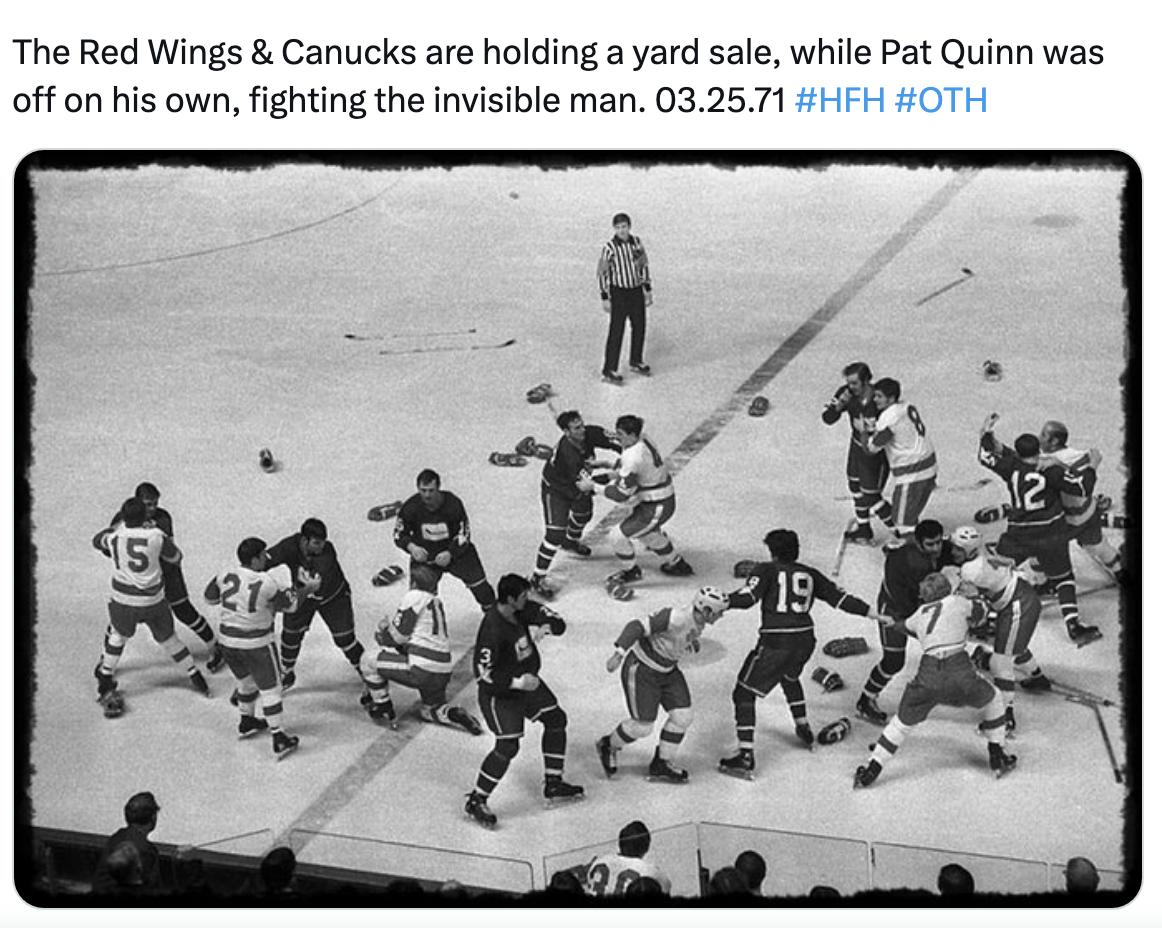
Apparently it can also be a fight:
All of these pieces of my functioning have been vastly enabled by having worked as a journalist. Journalism, in fact, with the brainstorming of story ideas and the need to produce rapid-fire structures, dug a groove in my brain, one that felt good, because it provided a system for innate curiosity. Intense interest in structures of writing, combined with training in feature writing for magazines (endless thanks to Ray Paprocki, formerly of Columbus Monthly, for the real grad school I needed) has led to the assumption that operates underneath the surface of everything: a book is basically a long feature article. My features could sprawl out into 10,000 words that had to be cut, and a book these days is getting shorter and shorter, with 70,000 often being a comfortable goal. So it’s fine; a chapter is a feature, etc. etc.
I’m just saying this all because there’s a discussion that continues and that I fully support about how “write every day” is unrealistic, that productivity measures are ableist and classist and everything else. I agree with all of those. What I’m saying is that I don’t think of my work in terms of productivity and output. I think of it in terms of “what creative work I need to keep this very specific brain functioning,” and I am high need. I need a LOT of containing. I have adapted to some very specific quirks in my brain and this is the result. It’s an effing mess, a total yard sale. But it’s fun?
This is, too, part of what the neuroscience book is about: it’s a process, not a product. And I believe there’s a certain place that older brains get to where you understand and can work with your own clutch and gearshift and transmission. My brain sticks in certain places and makes weird noises but is reliable out on the highway. As a teacher, I worry about this “focus” and “completion” mentality that students bring into the classroom. I worry about the effects on their mental health. I’m in it for the opposite reasons: because I need it, and it gives back, like any practice you build over time.
Creative practice is good for you. Your creative practice works with your brain and is different than anyone else’s.