Farah Ahamed's "A Channel of Peace"
The Sinéad series continues!
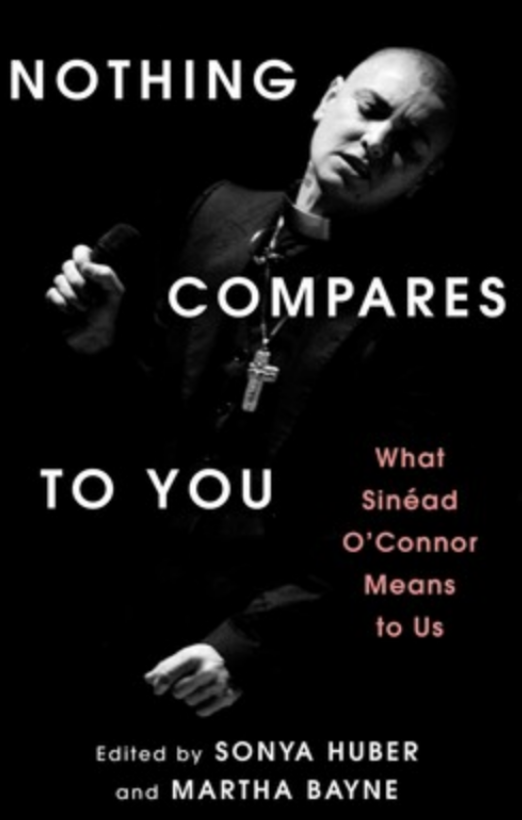
This summer, I am running a series of essays about Sinéad O’Connor to celebrate the publication of our book: Nothing Compares to You: What Sinéad O'Connor Means to Us.
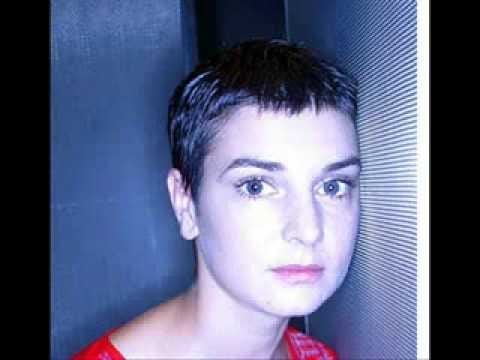
Sinead O'Connor - Make Me A Channel Of Your Peace (with lyrics)
Today we have a beautiful original essay by Farah Ahamed, “Channel of Peace” by Farah Ahamed. Past entries in this series:
- Rebecca Evans’s original poem, “Shuhada' Sadaqat”
- Tamara MC’s original essay, “The Night Sinéad O’Connor Found Me in a Convertible.”
- ’s original essay, “To Mother You”
- Jerry Portwood’s original essay, “Her Eyes Are My Beacon, Her Voice My Guide”
- Rebecca Kuder’s original essay, “Everywhere is War.”
- Noah Berlatsky’s “Sinéad O’Connor’s ‘I Do Not What What I Haven’t Got’ speaks to the fight against Trump from 27 years in the past,” which originally appeared in the Chicago Reader.
- Aimee Seiff Christian’s essay “I loved Sinéad for her wild courage and rage,” which originally appeared on WBUR’s Cognoscenti.
- Shawna Kenney’s original essay, “Feel So Different.”
- ’s essay “Stretched on Her Grave” which originally appeared on her Substack, Off the Record.
- April Nance’s original essay, “Sinéad and Barbie and Me.”
- Emily J. Orlando’s original essay, “‘You Asked for the Truth and I Told You’: For Sinéad”
- Eileen Toomey’s “In Defense of Sinéad O’Connor,” which originally appeared in The Rumpus.
- Jocelyn Jane Cox’s essay “Sinéad O’Connor Helped Me Find My Voice,” which originally appeared in in Sari Botton’s .
- Jeff Dorchen’s essay “Ketch Vampire”
- Erika Meitner’s poem “Sinéad O’Connor Was Right All Along,” which originally appeared in LitHub.
Sinead O’Connor: A Channel of Peace
Farah Ahamed
I first encountered Make Me a Channel of Your Peace" when I was fourteen years old. It wasn’t through any profound awakening, but in the uniformity of a convent school classroom in Nairobi. The rhythm of its words, sung together with my classmates in a choir of eager voices, became a part of me, repeated without much thought, as we recited it every morning. All of us together, girls in pleated, blue skirts, white shirts and red sweaters, singing those words without any realisation. At that time, it was just another hymn, another prayer in a long line of devotions that came with attending an Irish Catholic Convent girls school in Kenya. . St. Francis of Assisi’s words weren’t mine to claim yet, not in the sense of deep understanding, at least. I was simply a student following the ritual, a part of the collective rhythm of prayers.
Decades passed. The memory of those morning assemblies in the school concert hall faded, along with the words I had recited so many times. Life moved me in different directions, and the prayer was something I left behind. But as often happens with life’s quiet mysteries, the prayer reappeared, like light seeping through cracks, when I wasn’t looking for it. I was living in Kampala, Uganda when I stumbled upon it again. A friend lent me a book by Eknath Easwaran, The Mantram, a guide to spiritual wisdom. As I read through his explanation of the Eight Point Meditation Technique, his reference to the Prayer of St. Francis as a meditation anchor caught my attention. He described how, before starting meditation, one could recite the prayer slowly, emphasizing the meaning of each word. I was moved when I learnt about St. Francis of Assisi, and how his life had inspired the prayer. For the first time, I understood the prayer as a plea for peace, as a call for light to shine where darkness dwells. I realised that I had been reciting it for years, mindlessly, but never allowing the words to sink in. Now, the words resonated and had meaning, and it was humbling to think that these same powerful, mystical words which had passed through so many lives, over many centuries connected me to them. From the loud recitations of my schooldays to the silent reflection of my adult life, I saw how the prayer had always been there, anchoring me.
Years later, after a period of inner turmoil, I found myself once again reconnecting with these words during a session in pranic healing in Kerala. The healer explained how Master Choa Kok Sui recited the prayer as part of the Twin Hearts Meditation. He had developed a meditation practice to promote healing and peace to the self and the world. Quite unexpectedly, I found myself once again returning to the words of St Francis. I believed it wasn’t a coincidence that I had received a quiet reminder from my past on how to stay rooted in myself and stop the feelings of despair.
And then, one day, I heard Sinéad O’Connor sing it. I had just relocated to the UK, struggling to find my place in a new city. Living in London, with its sprawling streets and transitory atmosphere, felt alienating. Sinéad’s voice, deep and resonant, pierced through the cacophony of the traffic, ambulance sirens and seagull cries. Her musical interpretation of the prayer, her throaty, haunting rendition, was a moment of recognition. Her voice carried something timeless and sacred that resonated with the peace I had always sought but never fully understood.
In that moment, as I listened to her sing, something within me clicked. The sense of displacement I felt mirrored the very prayer I had been reciting for years.
‘Where there is hatred, let me bring love; where there is injury, pardon..."’
The words, once vague, became alive with energy that was electrifying. Her voice rang in my ears and became a part of my own spiritual practice. Her voice became the thread that pulled all the years of repetition together, and with every note, I began to sing the prayer in my mind, in her voice, as if the rhythm she gave it, were now mine to claim.
What struck me most was how the prayer had found its way back into my life at exactly the right moment. In a time when the world seemed more fractured than ever, when there was no recognition of humanity, when division and strife reigned supreme, St Francis’ call for peace, understanding, and light felt more urgent, more necessary. The words of St. Francis were more than a prayer for personal peace and light, they were a plea for the collective healing of humanity.
As I look back today, reflecting on the journey this prayer has taken me on, I realize that it was never about the prayer itself. It was about the way it has evolved with me and how it has been a constant companion during times of joy, sorrow, confusion, and clarity. When I first heard Sinéad sing, I wasn’t just hearing the prayer again; I was hearing the deep call to return to my roots, to my center, and to the values I had lived by without fully understanding them. Her voice became the key to unlocking the deeper mystical meaning of those words, and an invitation to embody them fully.
Most of all the line “To be consoled as to console, to be understood as to understand...” which had always puzzled me, had a new clarity. I realised that it speaks not just to the act of giving, but to the shared nature of compassion and healing. It was after hearing her sing it, that I understood the profound exchange they call for, how, in the act of understanding others, we open ourselves to receive it in return. Sinéad O’Connor’s voice brought this truth alive in a way that was vulnerable and powerful. Her interpretation of the prayer was a quiet revelation and mirrored her own spiritual journey and depth.
It was in listening to Sinead’s voice, that I felt St Francis’s ancient, timeless truth being taught to me again. Something I had only ever known in fragments about the sacred, reciprocity of empathy and peace. Sinéad’s spirituality flowed through her rendition, making the prayer not just a set of instructions for living, but a joyful, eternal truth that connects and reverberates in all.
Text within this block will maintain its original spacing when publishedFarah Ahamed is the editor of 'Period Matters: Menstruation in South Asia,' published by Pan Macmillan. Book Riot describes it as ‘an essential book about the female body that dispels misconceptions.’ Her short fiction and essays have been published in White Review, Markaz Review, Ploughshares, Massachusetts Review, LA Review of Books and other journals.
Let me know if you have any questions, if you want a review copy, if you want to host an event, or anything else!
xoxoxox
Sonya