Fixer-Uppers and Best Decisions
On serial killers and Teddy Roosevelt and color guards.
My husband is home, which is great and hard and interesting and beautiful, and he is transitioning back to our version of life. Transitions are hard. And you never really know how things are going to turn out, but when everything is running along according to a pattern, you have the luxury of forgetting that larger fact about life.
I was nervous picking him up, and I had the dog in the car because he really missed the dog. And what cracked me up is that the dog kind of squealed and head-butted him, but then after a few minutes went back to staring out the window. She was like, “Okay, my person is back. I knew he’d come back.” I think dogs remind us what faith can be. Maybe dogs invented faith. Humans definitely invented hope and despair.
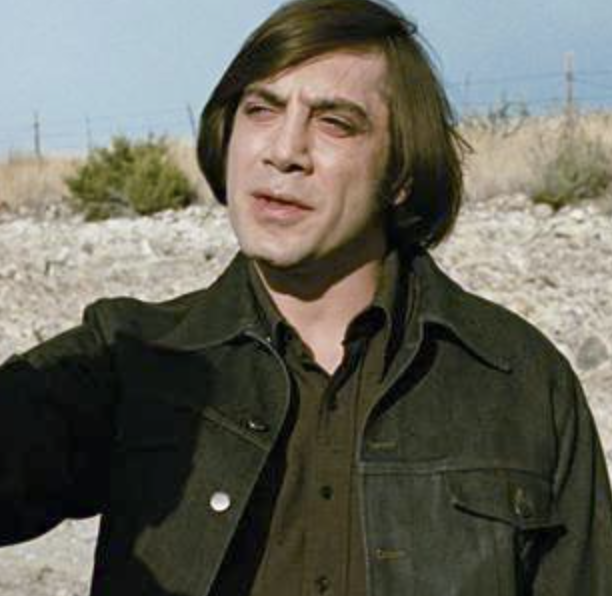
Weirdly, or not, the movie that my husband and I love to watch together is No Country for Old Men. It’s not exactly a rom-com, more of a drug cartel/serial killer movie based on a novel by Cormac McCarthy. The writing is really great, as is the acting. We say the lines to each other so much that I kind of like our version better than what ends up being on the screen when we re-watch it.
Why do we both love this movie? It’s something about the minor characters, maybe that each have their own acute selves. It’s like a series of tiny plays, and everyone is hassled, sweaty, awkward, and wounded. And those qualities also encompass their dignity. Also Woody Harrelson and Josh Brolin and Tommy Lee Jones. My husband does a great Tommy Lee Jones as sheriff, who says of the whole sweep of history, “It’s the dismal tide. It is not the one thing. ” Isn’t it, though? They were talking about being polite and not having blue hair, and how that leads to the breakdown in society, so I emphatically disagree with that part, but they’re right about life being like this in general: grains of sand accumulating toward a tipping point.
Also there’s this killer, Anton Chigurh—played excellently by Javier Bardem—who is very scary, and yet he has an oddly coiffed hairdo, a kind of curled-under bob, that is totally at odds with his ruthless vibe. He chooses his victims, and then he sets up little quizzes and questions, with one answer that will (seemingly) free them or not, like a kind of parody of free will. There’s a moment where Chigurh is hassling someone he’s about to kill, and he asks, “If the road led you to here, of what use was the road?”
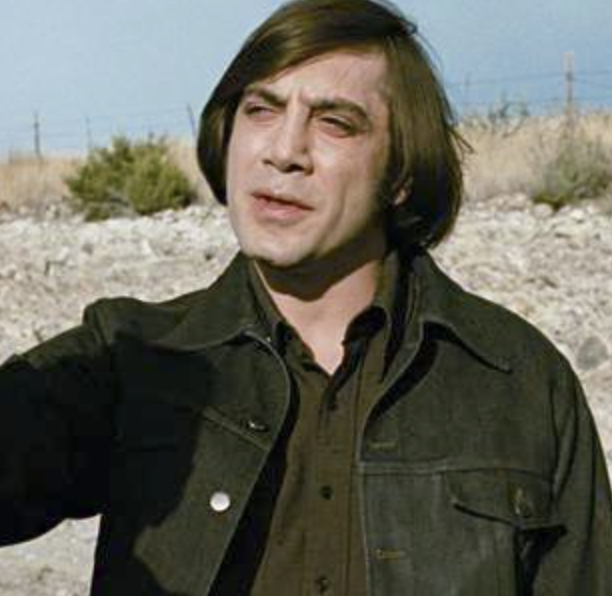
Dude: that’s a question. And it has been coming up in my head. It comes up a lot during hard times. Whenever I’m in a crisis, I find myself asking, “What did I do to get here?” (But in Chigurh’s voice. In my head. Which then always makes me both sad and want to laugh.)
It’s a serial killer’s question. I have been warned not to think that way, because life is not a series of branching paths like a Choose Your Own Adventure novel, where the significant decisions are clearly stated. It’s a veritable fractal carnival of complexity. It’s not Path A or B, it’s Path 249102591075917097089038b. I don’t even know how many real decisions I’ve made in my life between equally attractive opposing options. Instead, I just sort of fumble toward the next thing that seems okay. I’m not against setting goals, I just don’t operate in such a logical way.
But happily, Chigurh is not God. Life doesn’t punish us for our bad choices, and life doesn’t reward us for our good choices. Life is pretty challenging all around. But it’s easy to get stuck in a loop of imagining the life one might have had, branching out from some critical juncture. I imagine this might be part of what makes us human: we are imagining forests of decision trees with branching choices, some of which might be back in paradise. I could imagine a life where I had no challenges and crises, but what I’m really doing is comparing my own present life to the life of someone else, a life that looks easier from the outside. And comparison is the thief of joy. (That quote is attributed to Theodore Roosevelt, which feels….weird? Based on no evidence at all I kinda doubt this was his original thought.)
Still—I compare. I torture myself with comparing my worries with someone else’s Instagram page—and I usually choose someone who does that thing where only certain pictures go on “the grid.” I throw everything on the grid; I don’t care. I’m a yard sale and I know it. But I’ve gotten great finds at yard sales and thrift stores and tag sales.
I have a hard time when people express gratitude for their marriage with the words that their person is “the best decision I’ve ever made.” Whenever I see someone congratulating themselves for their best decision, I read, “Sonya, you have made the worst decisions.” I don’t think this phrase would ever have stung so much if I hadn’t been in an abusive relationship in the past. That, clearly, involved some decisions I might make differently today. But are we telling everyone that they ended up where they are because of bad decisions? I don’t even believe that to be true. Love isn’t retail. And it implies this simple choice, and kind of implies that marriage is simple: a good one or a bad one.
As a queer person, I know that I don’t choose who I love. Love is love. Love just happens, and to me it’s a mystery. We can’t be programmed or deprogrammed to love who we love, to love someone else. And I think we turn to specific people at specific times for a whole range of reasons, not knowing how things will unfold. Was that the best decision, or does it seem lucky now? I’m happy for you if you’re happy. But maybe you got lucky and that’s enough.
And I, too, am very lucky. This second time around, I’ve had challenges, but I’ve also had the enormous privilege to grow with someone (instead of fleeing them) over fifteen years. It’s awesome, and it’s taken work, but we’re both different people because we hung around for the conversation. Whether that happens or not in the middle is completely invisible at the beginning, like so many things.
The title of this newsletter, “Nuts and Bolts,” arose because I thought, okay, I don’t know what I have to offer but maybe I can do lists of practical things. At one level (not the level where I lose stuff and forget appointments and can’t read a calendar) I am a very practical person. I am the one who goes to Home Depot and figures out what we need.
As a handy person who has had most of my long-term relationships with folks with troubles and mental health issues, I have had the sentence “You love a fixer-upper” said to me and about me.
This means that, apparently, I am a person (it’s always a woman or female-appearing person addressed) who both can’t hold a hammer but is a skilled contractor. She collects wounded birds and wants to “fix” them. It’s amazing to me how much this is still embedded in our culture, hanging on by a thread along with the horrific “Why didn’t she leave?” Could you even imagine saying this sentence about a man? When you think about a man who has a partner who is struggling or with mental health or substance abuse or other serious issues, I guarantee your first thought is “Oh, he’s so brave and kind.”
I learned early early early in my life that there’s no fixing people. I can barely handle the daily maintenance required to keep my own life running. I am drawn to folks with troubles because I identify, because I have had them too. I have had troubles early and often, and I have felt lonely in relationships where there wasn’t a shared understanding of the burdens a person might carry. Troubles often also carve in the soul a depth, a capacity for great feeling and empathy, and these are the people I am drawn to.
One of the reasons I don’t like the phrase “choosing a fixer-upper” or “she likes a project” is that it, too, is transactional. It is about purchasing a house. It’s about looking at the range of options on the market and paying money for a shelter that’s in disrepair, for a house that is in some small or large ways broken, because it is cheap and you think you have the money and the skills required to make it into something different, for a return on your investment.
And people who are drawn to people with trouble probably had factors in their lives that made trouble feel familiar, feel like home. I have been attracted to people because I thought that, given their level of trauma and mental health challenges, that I might feel normal around them, but that wasn’t the reason I chose them. There’s this thing called trauma bonding, I know, but it’s often mistakenly defined as two people with similar levels of trauma who connect; that’s not accurate. It’s about the cycle of abuse. Whether two people connect because they have the same level of trauma is not something we should judge, because trauma is kinda ubiquitous, and again, the judgment is that someone with trauma is damaged.
People feel like “home” because they mirror the homes we have known. And we shouldn’t judge anyone based on where they come from. Each person is responsible for learning about their own red flags, for responding to signals of danger. And it can definitely be said about me that in the past, I have run full-speed toward a whole color guard of red flags because they looked so pretty whirling in the wind. I have not taken my own instincts of trouble seriously. But that is not “choosing a fixer-upper” because I need a broken person to distract me from my own life or to feel better about myself. I’m a challenge enough.
Thanks for listening to my ranting. May we all be lucky enough to find people in the world who value us, who love us and can be relied upon and make us feel like we are special.