Jerry Portwood's "Her Eyes Are My Beacon, Her Voice My Guide"
The Sinéad series continues!
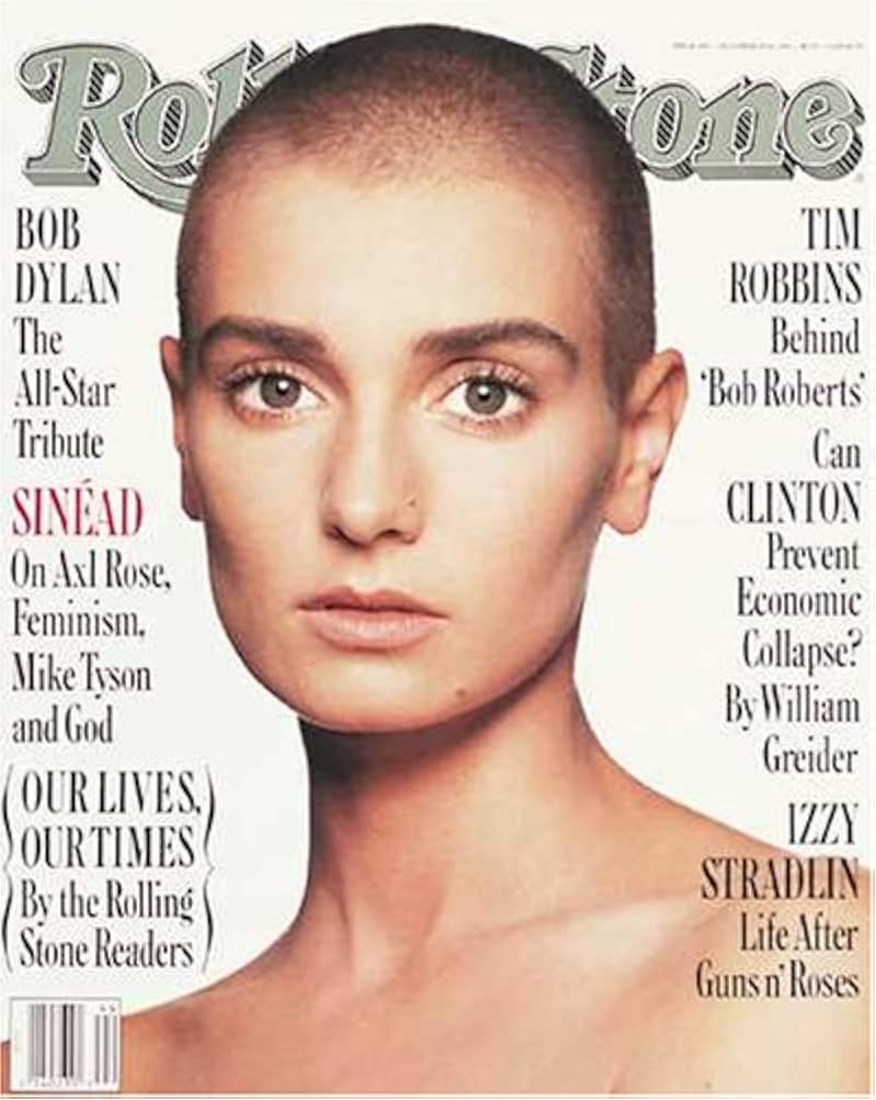
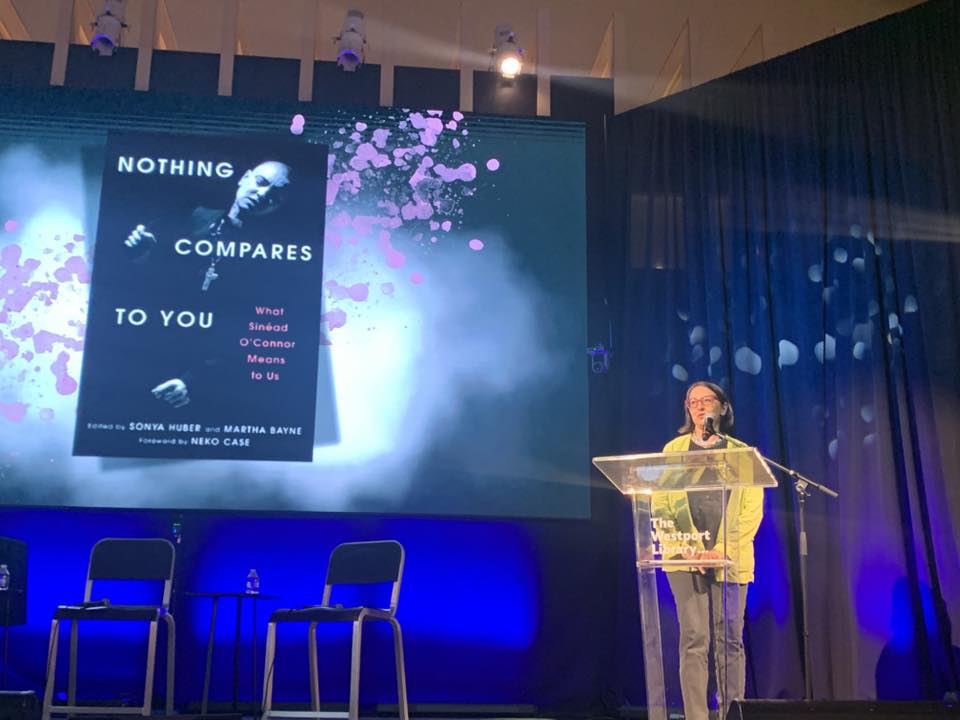
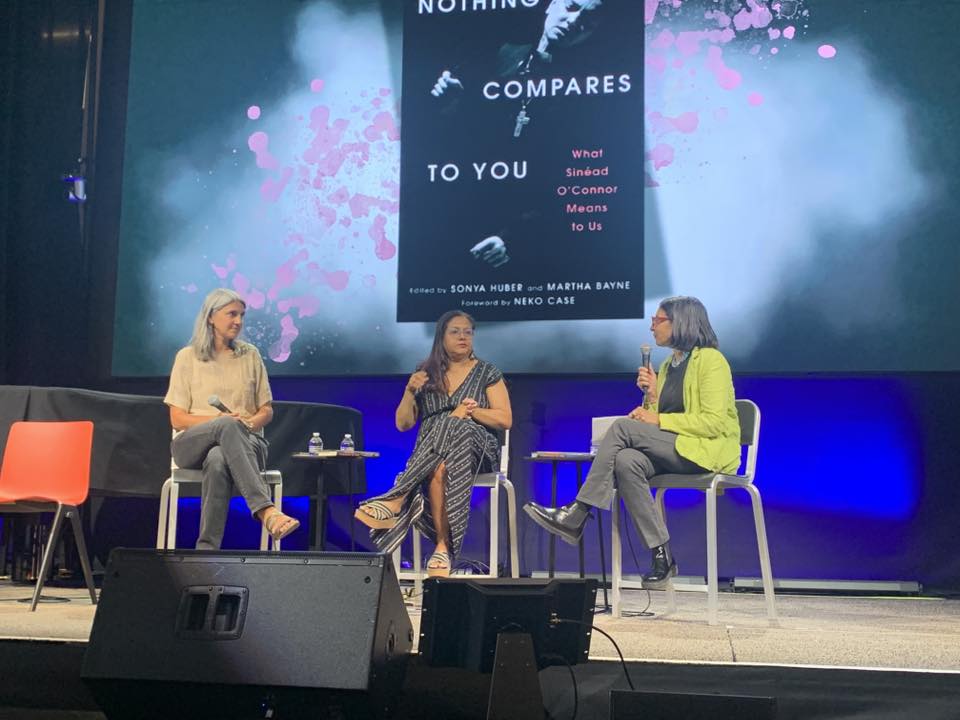
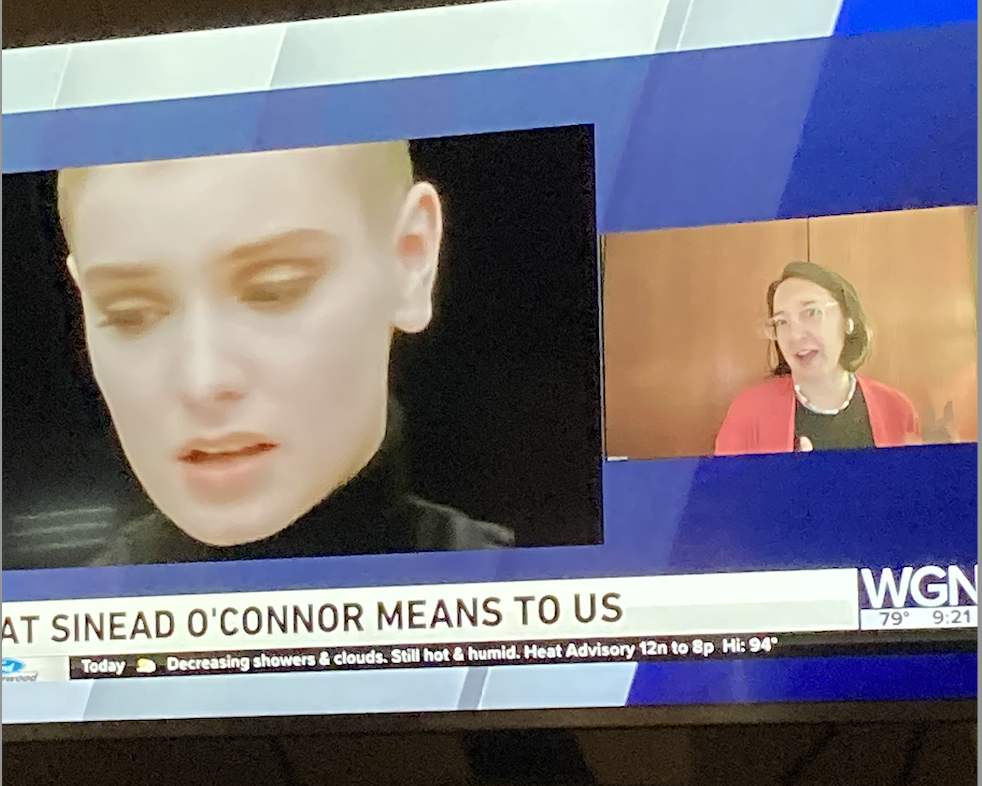
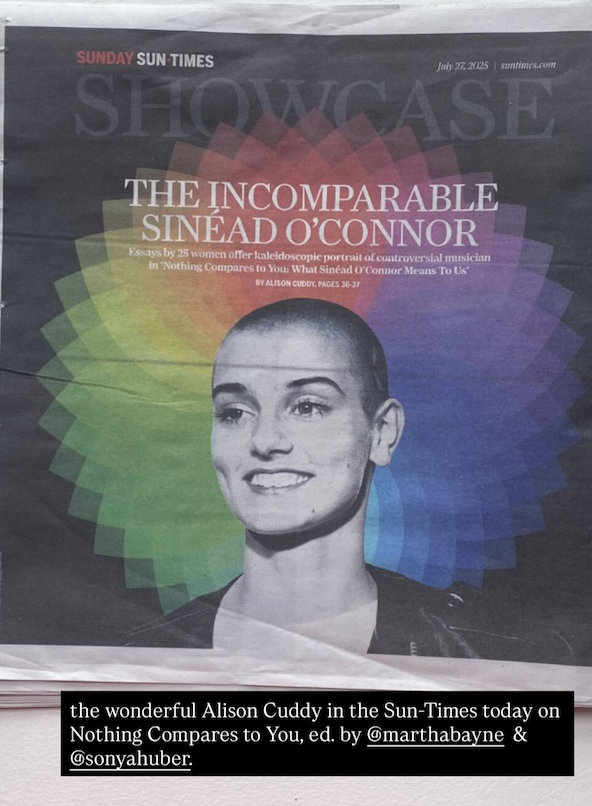
This summer, I am running a series of essays about Sinéad O’Connor to celebrate the publication of our book: Nothing Compares to You: What Sinéad O'Connor Means to Us. Our Westport Public Library event on Aug. 6 was incredible, including a panel with contributors Nalini Jones and Sharbari Ahmed as well as Beth Boquet singing “Last Day of Our Acquaintance” with David Schmidt on guitar. The question and answer period was beautiful, and included a question from a man that I keep thinking about: has there been an apology from the Catholic Church in response to all the rage directed at Sinéad, knowing that she was right?
Today we have a beautiful original essay by .
Past entries in this series:
- Rebecca Kuder’s original essay, “Everywhere is War.”
- Noah Berlatsky’s “Sinéad O’Connor’s ‘I Do Not What What I Haven’t Got’ speaks to the fight against Trump from 27 years in the past,” which originally appeared in the Chicago Reader.
- Aimee Seiff Christian’s essay “I loved Sinéad for her wild courage and rage,” which originally appeared on WBUR’s Cognoscenti.
- Shawna Kenney’s original essay, “Feel So Different.”
- ’s essay “Stretched on Her Grave” which originally appeared on her Substack, Off the Record.
- April Nance’s original essay, “Sinéad and Barbie and Me.”
- Emily J. Orlando’s original essay, “‘You Asked for the Truth and I Told You’: For Sinéad”
- Eileen Toomey’s “In Defense of Sinéad O’Connor,” which originally appeared in The Rumpus.
- Jocelyn Jane Cox’s essay “Sinéad O’Connor Helped Me Find My Voice,” which originally appeared in in Sari Botton’s .
- Jeff Dorchen’s essay “Ketch Vampire”
- Erika Meitner’s poem “Sinéad O’Connor Was Right All Along,” which originally appeared in LitHub.
Her Eyes Are My Beacon, Her Voice My Guide
Jerry Portwood
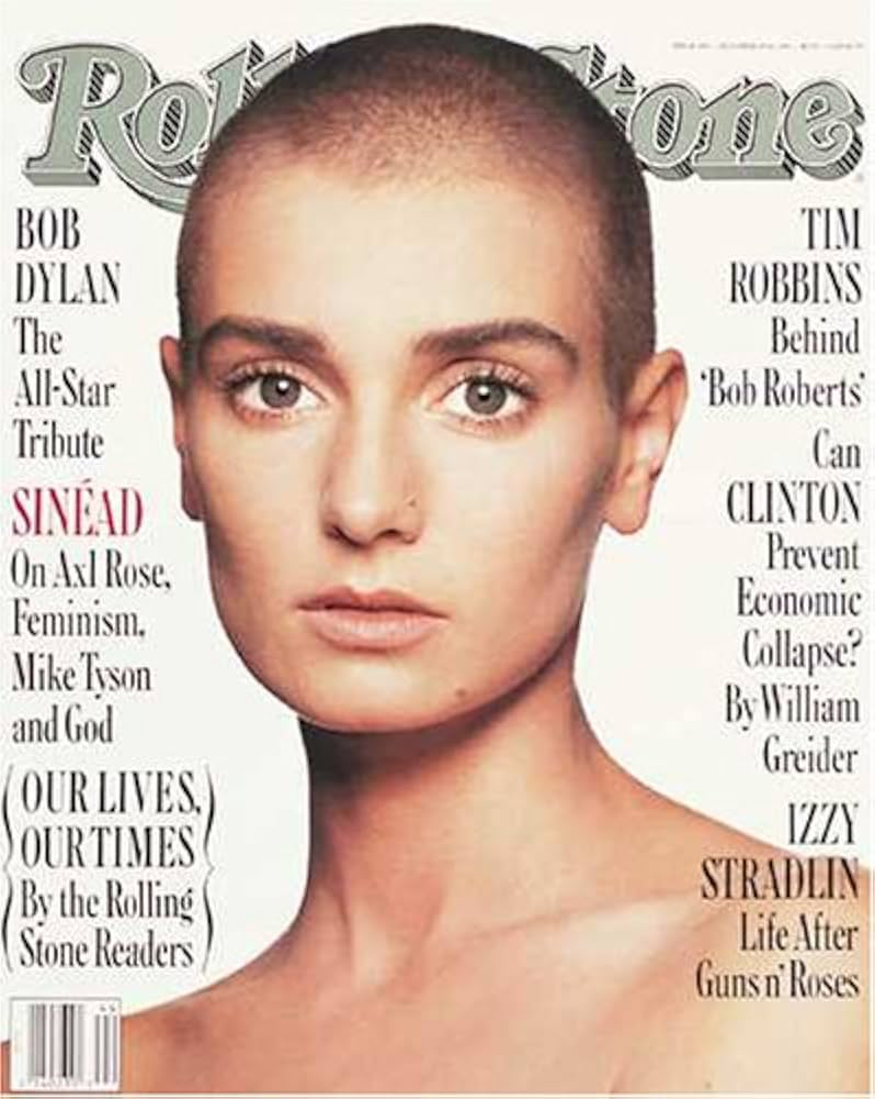
Her eyes glow from the Rolling Stone cover taped to my wall. I tear them out and then carefully wrap the covers with translucent contact paper to preserve them. I stick Sinéad alongside the other magazine pages and cardboard CD boxes of The Cure, REM, 10,000 Maniacs, Depeche Mode, Morrissey. My truth tellers.
Back in seventh and eighth grade, I stuffed a Trapper Keeper with Paula Abdul photos from teen rags. Thinking I was proving my straightness to my girlfriend Bonnie, not realizing how gay it actually was. Those previous years with Madonna and Samantha Fox, Debbie Gibson and Tiffany had been fun. But now I yearn for something that I can feel in my guts.
I live on a U.S. military base in Okinawa, Japan. SPIN and Rolling Stone are my lifeline to American pop culture. I pore over the reviews looking for words and phrases about singer-songwriters that speak to me: confessional, raw, heartfelt. I’m late to the game, always late. But that January 1992 cover of Sinéad O’Connor is my beacon. Her face, a religious icon.
I buy I Do Not Want What I Haven’t Got on CD. She speaks “The Serenity Prayer” in her thick accent—the first time I’d heard it as a boy raised Southern Baptist—and it’s an epiphany. I lay in my bed, listen to her voice with my headphones on and weep. It’s easy for me to cry these days. I’ve already admitted to close friends that I’m gay, even told my parents. That same year, I read about Henryck Górecki’s “Symphony No. 3” in the same rock magazines since the classical composition managed to go mainstream and sell millions globally, placing it on the album charts. I listen to those “sorrowful songs” and cry myself to sleep. I do the same with Sinéad. “Feel so different.” This is what I want to feel: sorrow, pain, suffering.
When Sinéad sings: things burn, they bleed, they hurt. She screams. She stomps. She wails. I keen like her. Feral and beautiful. Tribal and animal, closer to the earth. I consider myself a witch and think of Sinéad as a mystic guide. Her eyes bore into me. “I am stretched out on your grave and will lie there forever.” She sings about “the time we did it so hard there was blood on the walls.” I want to fuck that hard.
Like with the other artists I discover from my isolation, I travel backward. A friend records a tape of The Lion and the Cobra, and I am transported by “Jerusalem” and “Jackie” and “Mandinka.” Yes, “Troy” takes over as I pine for a straight boy who dates my best friend. Sinéad would spit at this absurdity. She kills dragons for you! She’s a phoenix from the flame! I’m a total convert and worship at the altar of Sinéad.
Living on an Air Force base on a subtropical island in the early ‘90s, I don’t have easy access to American television. We watch AFRTS—Armed Forces Radio and Television Service—a single channel that airs whatever it receives from the networks. I watch re-runs of MASH and Beverly Hillbillies for four years from the ages of 12 to 16, memorizing the storylines. At least we get David Lynch’s Twin Peaks. The fact that everyone I know is watching this strange show at the same time to find out who killed Laura Palmer creeps me out in the best way. No MTV means a friend smuggles in VHS tapes someone’s recorded live back in the States. We gorge on 120 Minutes, devouring the New Wave, punk and alternative bands that feel so far away from our realities.
I manage to see Sinéad’s glowing orb of a head in the “Nothing Compares 2 U” video. The tear. The fucking raw emotion of it all that is mocked for its earnestness. It’s hot and humid here in Okinawa, but I wore the grunge flannels and now shed all of that to wear black turtlenecks.
Somehow we do get Saturday Night Live. It’s never aired “live,” of course, since we’re a day in the future from the people back in North America, but it remains appointment television. I’ve watched Morrissey thrash around with his microphone and gold lamé shirt, tits out as he swishes and sways. I won’t miss Sinéad.
The bombastic horns of the orchestra and the epic scale of “Success Has Made a Failure of Our Home” sweeps me into its gorgeousness. Then she does that a capella song and rips the photo of the Pope. I gasp. I’m in love.
I’m spared the tabloid fury. But it’s all any of us talk about the next day at school. People laugh about that “crazy bitch” and how “fuckin stupid” she is. They drag her and call her a menace.
I must buy the CD Am I Not Your Girl? immediately. I expect more songs like “Success,” but I’m confronted with covers of standards and musicals. I’m confused. Where is the wild Gaelic huntress? Where’s the weirdness? I try to educate myself—so sheltered from the world that I’m not even aware of Evita or why “Don’t Cry for Me Argentina” has resonance. I place it on the shelf and turn to other more emphatic songs. (It takes me years to understand its odd genius.)
I don’t give up, however, still considering myself a completist in the cult of O’Connor. I pick up Universal Mother my senior year of high school (as a Columbia or BMG membership freebie?). I’m even more confused. Where is that bad-ass punk I’d over-identified with? Soon enough, Alanis and other women will rocket to stardom, eclipsing Sinéad’s tender and sweet odes that grow increasingly mystical and obscure. I stop buying her albums, move on to all the new ‘90s singer-songwriters, especially the ones I discover are lesbians crooning about queer love. I want anthems by troubadours with new messages that I can relate to.
When a boyfriend in college tells me that Sinéad comes into the Sunglass Hut in the Lenox Square Mall in Atlanta with her kids to shop, I’m confused. Not that she wants sexy shades, but that she has kids. I guess I knew she was a mom—she even sang about it—but this feels so banal and beyond the witchy, feral punk I’d adored. I think about stalking her to see what she looks like, but I decide that I don’t want to ruin the image of Sinéad with a pudgy new reality. The icon that still glows bright in my memory feels brighter than mom at the mall.
I want to see her at Lilith Fair, finally witness her singing live, but don’t have the money for tickets, or miss the date that she’s joining, or she’s mercurial and cancels and is replaced at the show that I manage to attend. Whatever the excuse, I never end up seeing her live. The one that got away.
+++
It’s 2017, and we hear reports that Sinéad is suicidal. She’s somewhere in New Jersey on a bridge? Is she threatening to jump?
I’m now an editor at Rolling Stone. How did I make it to New York and land at this place I’d dreamed about from an island in the Pacific? It feels ridiculous, but it is a job. Last year, the week after I started, David Bowie died, surprising everyone since he’d kept his cancer secret. It became my job to manage the “obituaries project,” so we wouldn’t be caught unaware like that again.
I assign staff writers and freelancers to prep obits on a list of a hundred notables. We still get caught by surprise. It was a year of milestone deaths. Glenn Frey of the Eagles, Merle Haggard and Leonard Cohen don’t have any personal resonances for me. It’s my job: Make sure we report on the deaths of music legends. I start to get the hang of it, our list of obits balloons, ready to publish at a moment’s notice.
Prince knocked everyone for a loop. I witnessed our photo director, a seasoned woman who wore her credentials like armor and had “seen it all,” weep openly at her desk. Then Carrie Fisher and George Michael at Christmas. That last one hit home. I joked that he made me gay. That ass in those tight jeans when I was just a kid opened my eyes to lust. We keep racking up the deaths, and I become numb to the emotions that fans ricochet across social media.
But please, not Sinéad. We prep the obit. I watch YouTube videos of her performing “Troy” live and cry along with her once again. She remains powerful—at least in memories.
We report that she’s “safe” after a note is posted to Facebook. False alarm. I stand down. Sinéad won’t be added to the growing list.
Yoko makes it. So does Joni. Chris Cornell doesn’t. Another childhood crush taken too soon.
When Dolores O’Riordan dies by suicide in January 2018, I’m devastated. I tell a reporter to check on Sinéad. We refresh her obit. Dolores feels too close. I’d wailed along to her songs with The Cranberries, loving her Irish lilt. I wallow in replays of “Zombie” and “Linger”. Please, not Sinéad.
+++
When I read the news that Sinéad has died five years later, I expect to hear it’s by suicide. I’m sad and shaken. She’s 56, the same age as my husband. Too young and vital. Too soon. Luckily, I’m no longer at Rolling Stone, so it’s not my duty to manage the tributes and the ranking of her songs, the business of optimizing for a celebrity’s passing. I bask in her music at home alone, texting with friends, weeping to myself. When it’s deemed “natural causes,” I’m relieved.
I listen to her memoir, luxuriating in her voice, her knack for storytelling. I watch the documentary. I binge more YouTube clips. I thought I understood her prophetic words, her truth. Now I realize that I was foolish. When I learn the abuse this human went through as a child, when I finally know what actually inspired “Troy,” I feel irresponsible. I never knew Sinéad. Or Shuhada' Sadaqat. Or however she identified.
Sure, I cherished parts of her but, like any icon—be it the Virgin Mary or Medusa, Nefertiti or Hecate, Mother Teresa or Malala—she is what we desire her to be. What we need at the time. She was an image of intensity and strength, as well as a vessel for pain and suffering. Used and abused by men and the marketplace. I worshipped at her altar, but then, like so many others, I transgressed and abandoned her. She was a powerful woman. She was weak. Misunderstood and maligned. Magnificent. Yet, as selfish and silly as it may sound, I miss her.
Jerry Portwood has been working as a journalist for 25 years, getting his start in alt weeklies and community publications—most of which no longer exist. His short stories and essays have been published in various print and online journals (many of those also have vanished). He launched The Queer Love Project to create a platform where LGBTQ+ people could share stories and experiences. He’s been a top editor at Rolling Stone, Out magazine and New York Press and has been teaching essay writing and arts criticism at the New School for 10 years. He's hoping to sell his debut novel, The Loneliest Boy in the World Saves Us All, as soon as someone is ready to say yes to publishing it.
Let me know if you have any questions, if you want a review copy, if you want to host an event, or anything else!
xoxoxox
Sonya