Muireann O'Callaghan's "To Mother You"
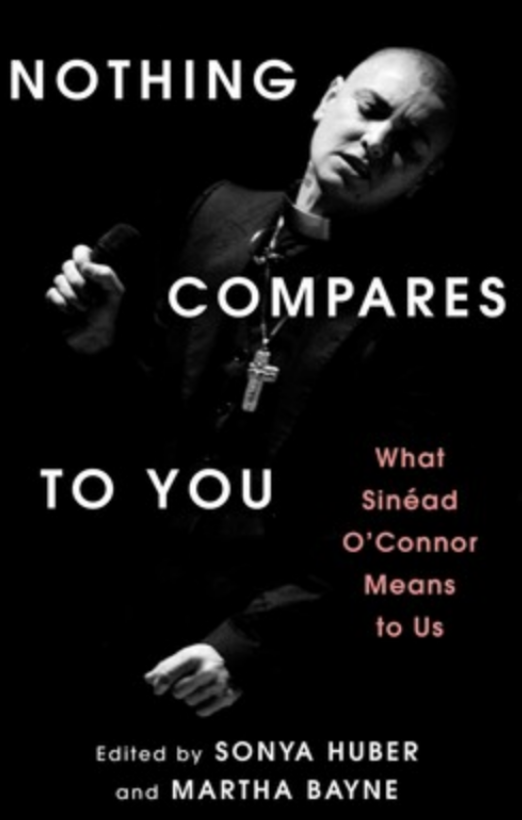
The Sinéad series continues!
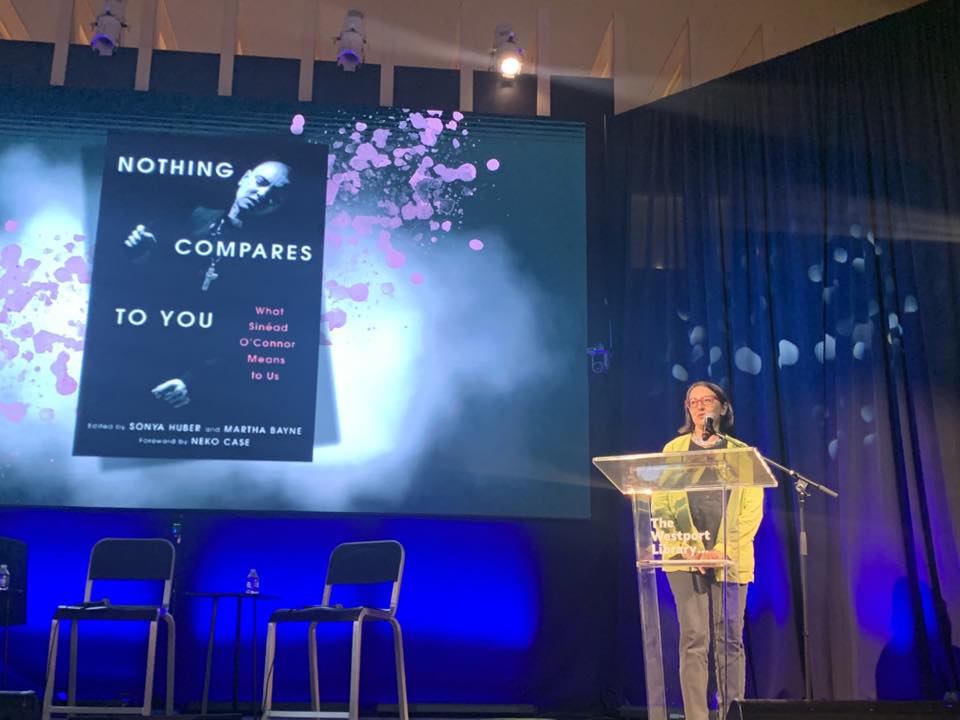
This summer, I am running a series of essays about Sinéad O’Connor to celebrate the publication of our book: Nothing Compares to You: What Sinéad O'Connor Means to Us. Our Westport Public Library event on Aug. 6 was incredible, including a panel with contributors Nalini Jones and Sharbari Ahmed as well as Beth Boquet singing “Last Day of Our Acquaintance” with David Schmidt on guitar. The question and answer period was beautiful, and included a question from a man that I keep thinking about: has there been an apology from the Catholic Church in response to all the rage directed at Sinéad, knowing that she was right?
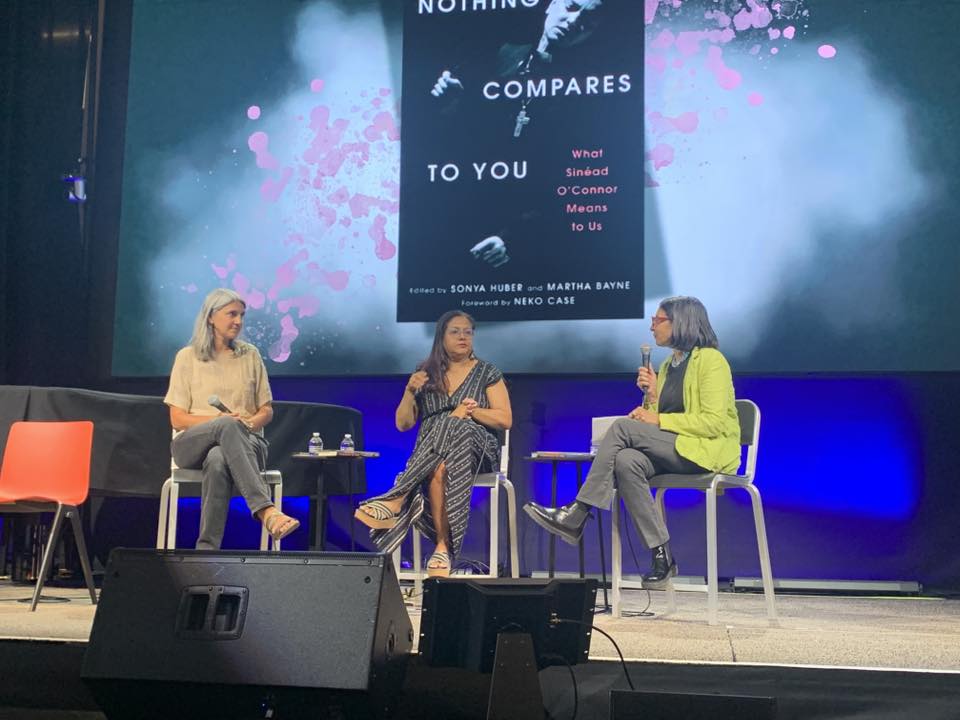
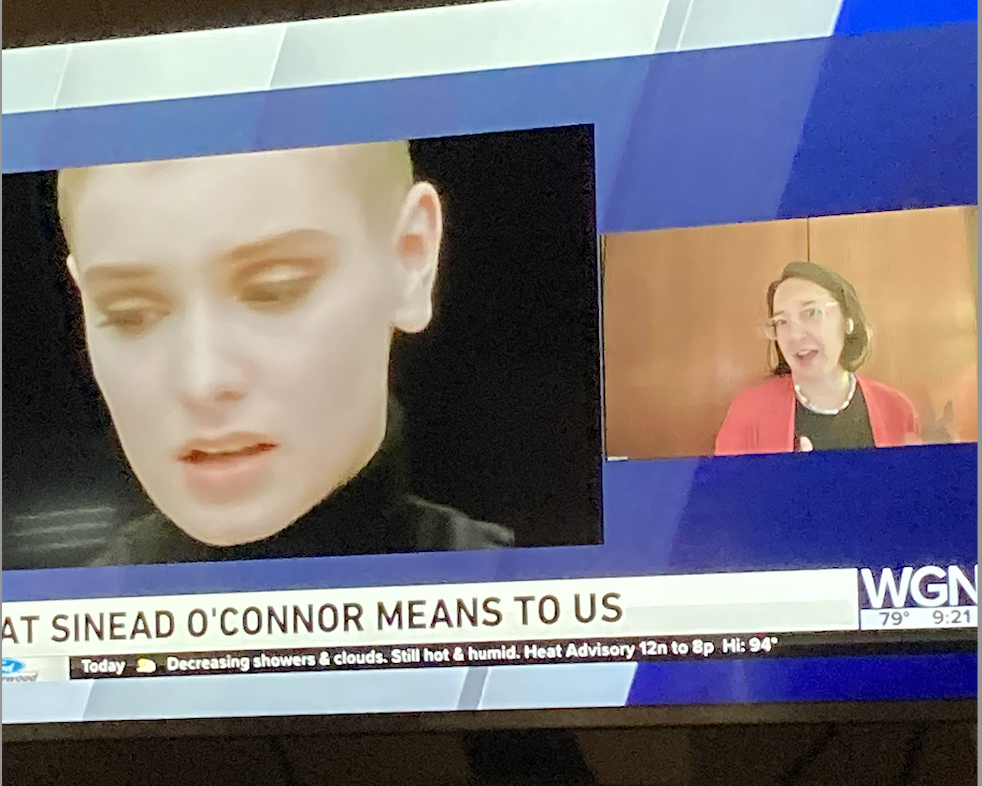
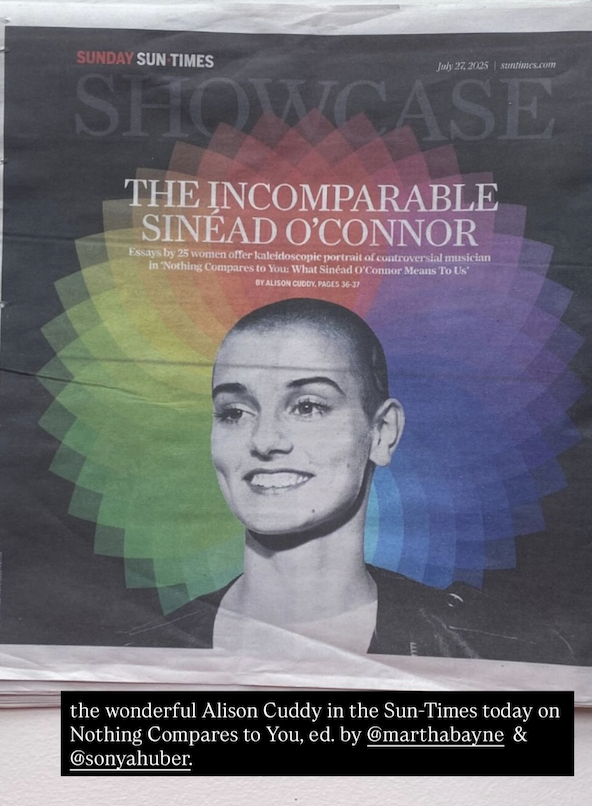
Today we have a beautiful original essay by , “To Mother You.”
Past entries in this series:
- Jerry Portwood’s original essay, “Her Eyes Are My Beacon, Her Voice My Guide”
- Rebecca Kuder’s original essay, “Everywhere is War.”
- Noah Berlatsky’s “Sinéad O’Connor’s ‘I Do Not What What I Haven’t Got’ speaks to the fight against Trump from 27 years in the past,” which originally appeared in the Chicago Reader.
- Aimee Seiff Christian’s essay “I loved Sinéad for her wild courage and rage,” which originally appeared on WBUR’s Cognoscenti.
- Shawna Kenney’s original essay, “Feel So Different.”
- ’s essay “Stretched on Her Grave” which originally appeared on her Substack, Off the Record.
- April Nance’s original essay, “Sinéad and Barbie and Me.”
- Emily J. Orlando’s original essay, “‘You Asked for the Truth and I Told You’: For Sinéad”
- Eileen Toomey’s “In Defense of Sinéad O’Connor,” which originally appeared in The Rumpus.
- Jocelyn Jane Cox’s essay “Sinéad O’Connor Helped Me Find My Voice,” which originally appeared in in Sari Botton’s .
- Jeff Dorchen’s essay “Ketch Vampire”
- Erika Meitner’s poem “Sinéad O’Connor Was Right All Along,” which originally appeared in LitHub.
To Mother You
Muireann O'Callaghan
1. “To comfort you and get you through”
Today, on the beach, there is no visible horizon. Because of fog, I won’t have a chance to feel vastness in the form of expansive views. I won’t have baked skin. But there is this: the crack of water and crushing of stone.
As I walk under the red clay Aquinnah cliffs and above a rising tide, I begin to hum Sinéad O’Connor’s song, “This Is to Mother You.” I hear my voice alongside waves that chew on and spit out sand.
I hear her words and remember the way she pronounces “th” in “through” and “mother.” This is distinctly Irish. Like the fog vibe of closeness and comfort. Insulated. It keeps me held. I’ve come all this way, to the island of Martha’s Vineyard for a conference, and I’m on a beach remembering how I felt as a kid on the cliffs in Ireland: the vast landscape, the small me. I wish for Sinéad O’Connor’s big voice: wailing, lulling, pulling through.
2. “All mistakes made in distress
All your unhappiness”
It’s not a people day at the beach, but even so, I change discreetly into my swimsuit. In the water’s weight, my shoulders relax, finally. At the conference, I have been failing at my goals. I lay on my back and let myself go buoyant. My ears sink beneath the water. I hear her sing, “When you need me, I will do what your own mother didn’t do.” I acclimate to the cold.
After, back on the sand, I am not ashamed to strip. I let the fog shroud me.
3. “For child we are so glad we found you
Although our arms have always been around you”
The touch of clothes brings me back. The memory is so vivid, I am in the 1970s in front of our small TV watching a laundry ad. A mother puts clean clothes on the body parts of her little girl, one slow, deliberate motion at a time. I would watch it, marvel at it, crave it: the glow of the cloth as one sock and then another rolled over the girl’s feet, then the vest, the kilt, the cardigan, each button pushed through its corresponding hole. The mother’s seductive fingering was a masterpiece of marketing for love and normalizing care and cleaning as women’s work. I didn’t have words for sales strategies or oppression.
Now, I wrap myself in clothes and feel their caress on my skin. Now, I am the mother and the child. We are not separate characters.
4. “Through when your dreams are only blue”
I don’t remember my mother dressing me—whether it was her deliberate choice not to get in my way or because she wasn’t available, I don’t know. There were a lot of us kids, and it was enough that she got us clothes. As a child, I made choices: the colors, the forms, the combinations. I mothered myself. I mothered others.
I sit on a wide slab of rock, and I think of Sinéad’s voice—the ghosts she made into rebel songs, her expressions of rage and tenderness. None of it is a sales strategy. None of it traps me inside restrictive roles. All of it helps me move through, mother through, feel through the limitations of visibility and acknowledgement for the complicated humanity we are.
5. “This is to mother you.”
Waves flood the shore, disrupt stones, hush for a moment in white froth, and ebb to sea again. My mother’s smile is the most beautiful smile I know. It makes me melt, no matter the divots of guilt and betrayal around the edges.
I hum and step through the fog. I am in her legacy— Sinéad’s, the sea’s, our mothers’.
Muireann O'Callaghan writes lyrical personal essays that explore places of home, and her work has appeared in Stonington-Mystic Patch, Grub Street’s 2024 anthology Our Planet, Our Stories, and on Substack’s "Muireann's Field Notes." She has participated in coursework with Grub Street and received a fellowship for the 2025 Martha’s Vineyard Institute of Creative Writing. She teaches writing at the University of Connecticut (Avery Point branch) and is a writing mentor at the US Coast Guard Academy, where she is safely stationed in the library, helping cadets craft brave stories. She lives in Stonington, CT with her husband and seven chickens.
Let me know if you have any questions, if you want a review copy, if you want to host an event, or anything else!
xoxoxox
Sonya