Noah Berlatsky's essay, "Sinead O’Connor’s I Do Not Want What I Haven’t Got speaks to the fight against Trump from 27 years in the past"
The Sinéad series continues!
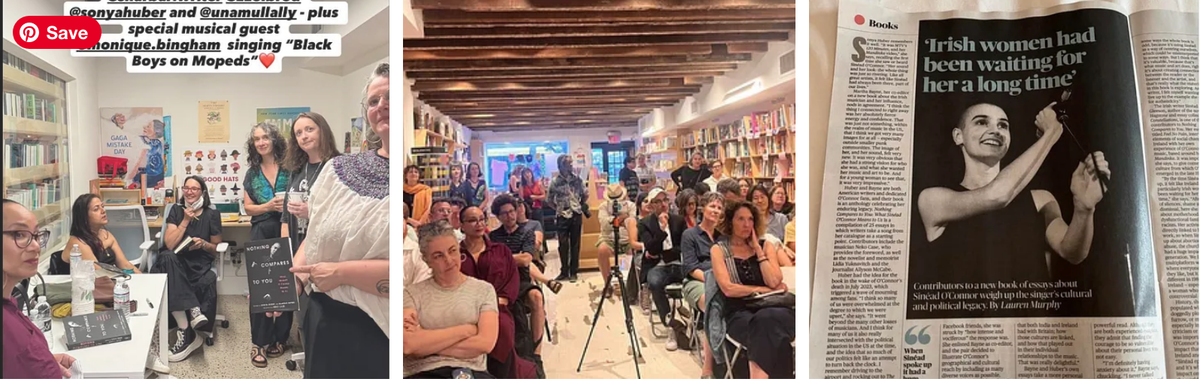
This summer, I am running a series of essays about Sinéad O’Connor to celebrate the publication of our almost-here book: Nothing Compares to You: What Sinéad O'Connor Means to Us. AND, lest I forget to mention, the book is out! By the way, there’s a feature on the book in the Irish Sunday Times, and we just appeared on WBEZ and in the Chicago Sun Times! And we’re in Chicago tonight, July 28th in Chicago at Gman! (Links and info at the bottom of this newsletter.)
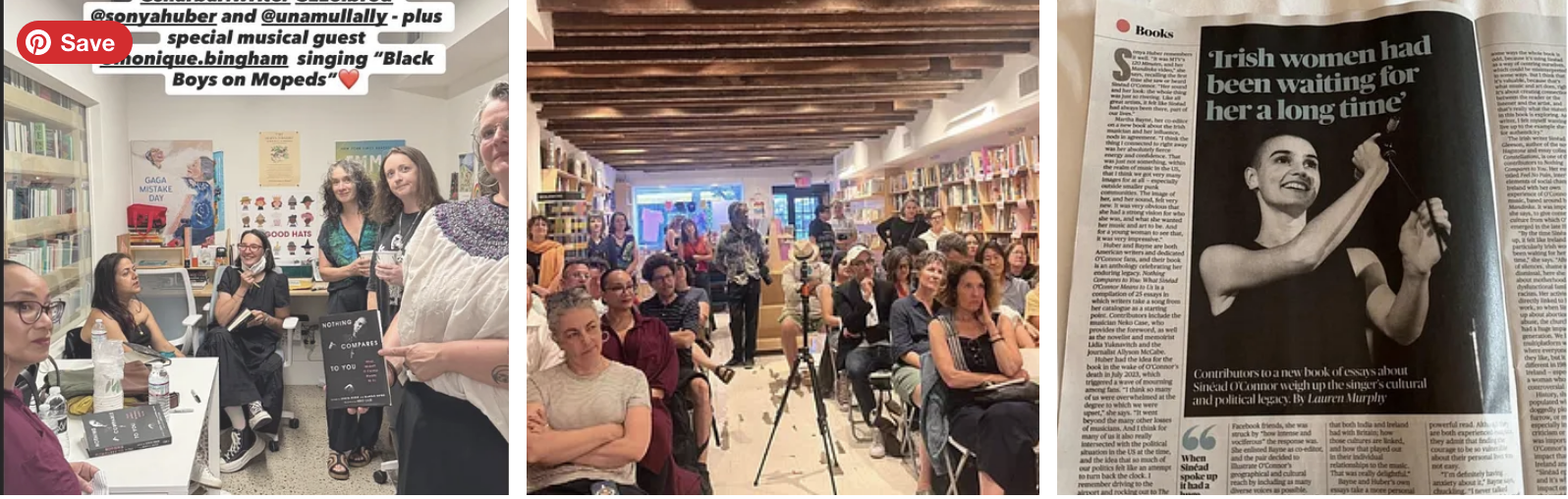
Today we have an excellent piece by that originally appeared in the Chicago Reader. This one holds a special place in my heart because it’s claiming Sinéad’s place in punk and protest music.
Past entries in this series:
- Aimee Seiff Christian’s essay “I loved Sinéad for her wild courage and rage,” which originally appeared on WBUR’s Cognoscenti.
- Shawna Kenney’s original essay, “Feel So Different.”
- ’s essay “Stretched on Her Grave” which originally appeared on her Substack, Off the Record.
- April Nance’s original essay, “Sinéad and Barbie and Me.”
- Emily J. Orlando’s original essay, “‘You Asked for the Truth and I Told You’: For Sinéad”
- Eileen Toomey’s “In Defense of Sinéad O’Connor,” which originally appeared in The Rumpus.
- Jocelyn Jane Cox’s essay “Sinéad O’Connor Helped Me Find My Voice,” which originally appeared in in Sari Botton’s .
- Jeff Dorchen’s essay “Ketch Vampire”
- Erika Meitner’s poem “Sinéad O’Connor Was Right All Along,” which originally appeared in LitHub.
Sinead O’Connor’s I Do Not Want What I Haven’t Got speaks to the fight against Trump from 27 years in the past
Noah Berlatsky
“Trump is going to make punk rock great again,” Amanda Palmer declared, speaking at an Australian folk festival last month. The sentiment is callous and somewhat clueless—Beyoncé and Kendrick Lamar and many others were already making excellent political art, and we didn’t need to elect Trump to inspire them. But Palmer is hardly alone in her nostalgia: the present threat of Trump’s fascism has a lot of folks thinking about the antifascist music of the past. Under our previous vacuous, right-wing celebrity president, hardcore and punk bands blasted out anti-Reagan, adrenaline-vomiting, punch-a-fascist-in-the-face anthems, some of which still resonate today: the Dead Kennedys’ forthright “Nazi Punks Fuck Off,” Circle Jerks’ “Stars and Stripes,” Black Flag’s “Police Story,” the Crucifucks’ more-offensive-than-thou “Hinkley Had a Vision.”
Wistfulness for the punk scene’s demonstrative macho rage is understandable. But the album from the Reagan/Bush/Thatcher years that I’ve been listening to obsessively as we march into the mouth of our own moronic Mordor is bleaker in its antifascism. Twenty-seven years on, the 1990 Sinead O’Connor record I Do Not Want What I Haven’t Got seems more prescient than all those gird-for-battle punk songs. When you’re still fighting the same fight after a quarter century, your rage can start to flicker. Grief, though, seems even more relevant.
I Do Not Want What I Haven’t Got opens with O’Connor reciting Reinhold Niebuhr’s famous serenity prayer: “God grant me the serenity to accept the things I cannot change, the courage to change the things I can, and the wisdom to know the difference.” Much of the rest of the album is in a confessional vein: O’Connor sings about divorce, about her mother’s death, about loss and hope, looking backward and moving on. But the Niebuhr passage hangs over everything, so that O’Connor’s private life and loves unfold against an ominous backdrop of political darkness. “I Am Stretched on Your Grave,” an old Irish poem, is a lament from a man to his lost love. O’Connor’s setting of it is in part a song to her mother, but its sorrow expands outward to blight family, religion, and the world itself. “My apple tree, my brightness / It’s time we were together / For I smell of the earth / And am worn by the weather.” The sinuous beat wraps around her keening voice, like death rising out of the ground.

The most explicitly antifascist song on the album is the slow, agonized “Black Boys on Mopeds.” It was inspired by the death of Colin Roach, a 21-year-old black man who was shot and killed inside a London police station in 1983—presumably by the police themselves. O’Connor doesn’t mention Roach specifically, but the Thatcherite England she describes is haunted not so much by his ghost as by the malice of his killers. “England’s not the mythical land of Madame George and roses,” she says, bitterly referencing Van Morrison’s Astral Weeks. “It’s the home of police who kill black boys on mopeds.”
And I love my boy, and that’s why I’m leaving
I don’t want him to be aware that there’s
Any such thing as grieving.
Young mother down at Smithfield
Five AM, looking for food for her kids
In her arms she holds three cold babies
And the first word that they learned was “please.”
When she repeats the chorus, half-singing and half-moaning in multitracked harmony, the connection to our own time seems almost unbearable. While hardcore punk presents a front of steroidal strength and unified resistance, O’Connor is more attuned to damage and pain, and the ways in which particular groups—black people, the Irish, the young, women—have been and will continue to be singled out. “These are dangerous days / To say what you feel is to dig your own grave.” Ideals and dreams are going to die; children are going to suffer; truth and love are going to be ground underfoot. Vulnerable people will do their best to protect vulnerable people, and it probably won’t be enough. The song makes me cry every time I listen to it.
But I Do Not Want What I Haven’t Got doesn’t offer only despair. “The Emperor’s New Clothes” is a bittersweet breakup song with a message of self-affirmation and hope whose defiance takes on a decidedly political tone. “They laugh ’cause they know they’re untouchable / Not because what I said was wrong” describes Trump’s odious entourage as accurately as it does whoever O’Connor originally had in mind. For that matter, “Through their own words they will be exposed” expresses a faith in honesty that is, in implication and I believe in intention, antifascist.
Punk anthems of the 80s (or the era’s political raps, from the likes of Public Enemy and Boogie Down Productions) don’t generally delve into the performer’s sadness. “Nazi Punks Fuck Off” doesn’t leave a lot of space to talk about deceased parents or broken love affairs. Political art is first and foremost political; you can confess your emotions or rage against the machine, but it’s difficult to do both.
I Do Not Want What I Haven’t Got, though, refuses to draw those lines. Private grief, private love, and private hope are all, for O’Connor, resources against injustice—and all are likewise under threat from those wearing the jackboots. For punks, anger was a weapon against fascism. Sinead O’Connor believed grief could be one too. Over the next four years, we’ll need them both.
Noah Berlatsky (he/him) is a freelance writer in Chicago. He is the author of Wonder Woman: Bondage and Feminism in the Marston/Peter Comics,1941-1948 (Rutgers, 2014), and of the poetry collection Not Akhmatova (Ben Yehuda Press, 2024.) His newsletter is Everything Is Horrible.
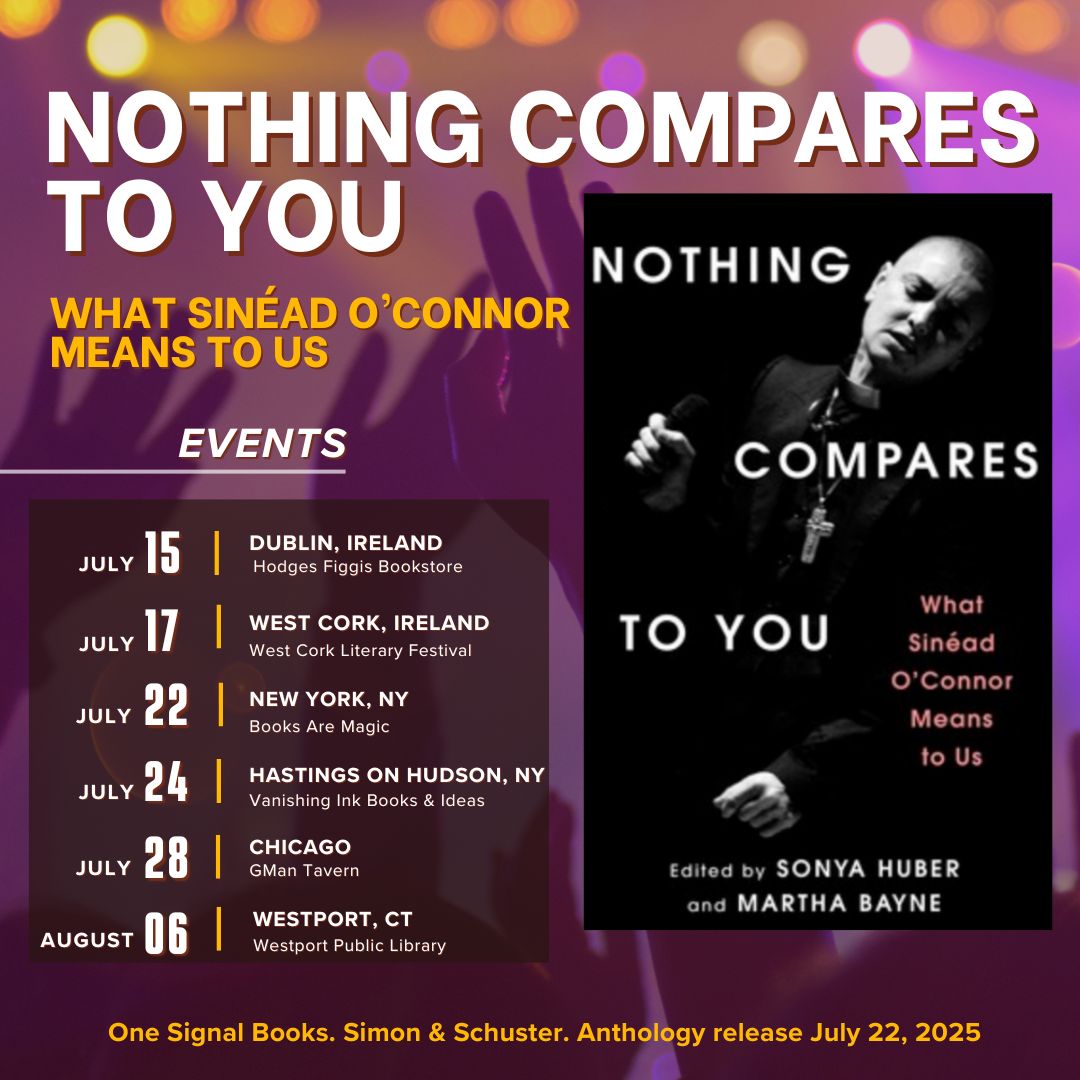
We’ve got more events and we hope you will join us for some!
- July 22, 2025 @ 7 pm: New York, New YorkBooks Are Magic, 122 Montague St., Brooklyn, NY 11201. Launch event with Sharbari Ahmed, Martha Bayne, Sonya Huber, Porochista Khakpour, Millicent Souris, and Zoe Zolbrod, with musical guest Monique Bingham. And on YouTube live!
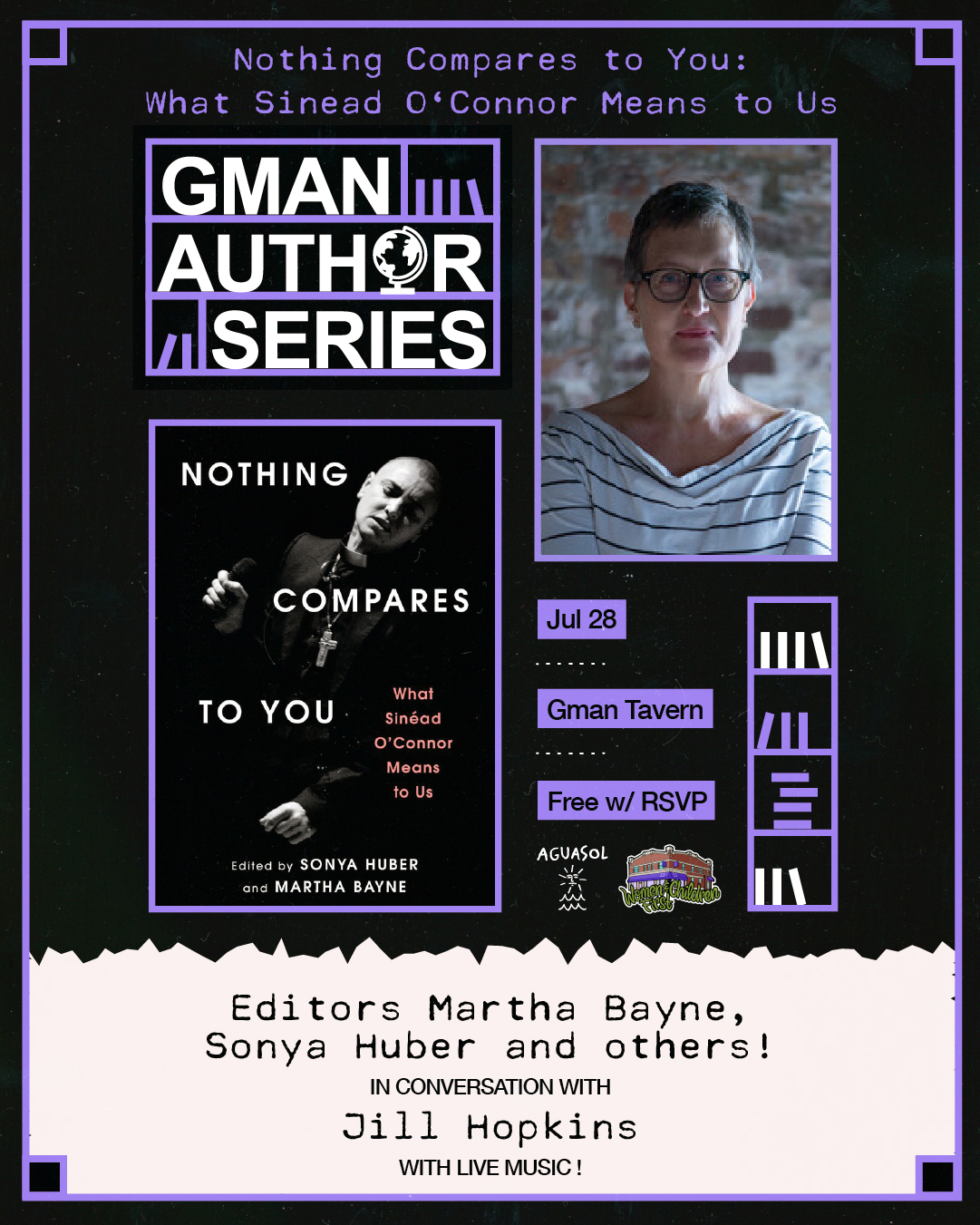
- July 28, 2025 Doors @ 6:30, Show @ 7:30: Chicago, IllinoisGMan Tavern: (Bar attached to Cabaret Metro) Book talk and party with Martha Bayne, Sonya Huber, Zoe Zolbrod, Megan Stielstra, and Gina Frangello -- plus musical performances of Sinead O'Connor songs by Amalea Tshilds, Marydee Reynolds, Jane Roberts, Nora O’Connor, Jeanine O’Toole, Eiren Caffall, Julie Pomerleau, and L. Wyatt. 3740 N Clark St. | Chicago, IL 60613
- August 6, 2025 @ 7 pm: Westport, ConnecticutLaunch and conversation with Sharbari Ahmed, Sonya Huber, and Nalini Jones. Westport Public Library, 20 Jesup Road Westport, CT 06880 203.291.4800
Let me know if you have any questions, if you want a review copy, if you want to host an event, or anything else!
xoxoxox
Sonya