Rebecca Kuder's essay, "Everywhere is War"
The Sinéad series continues!
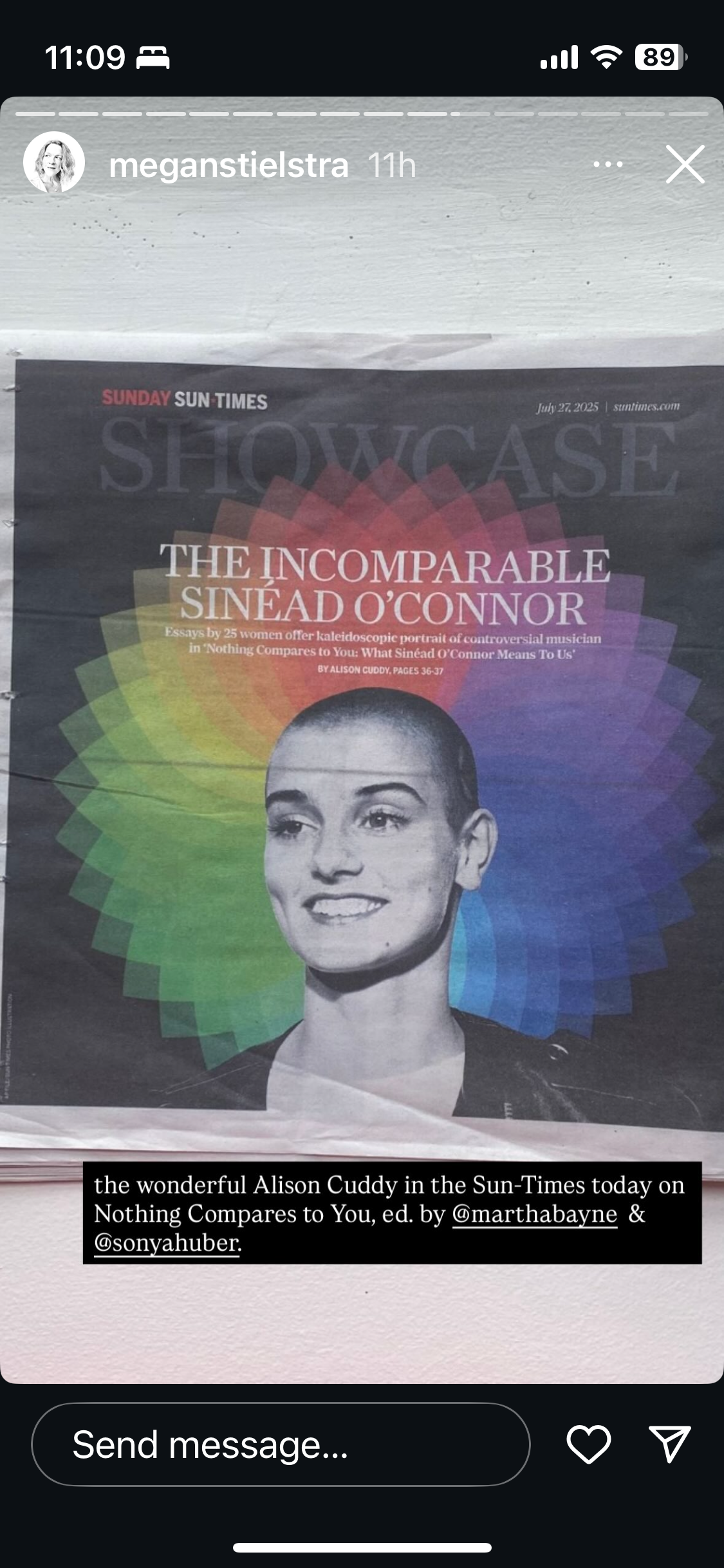
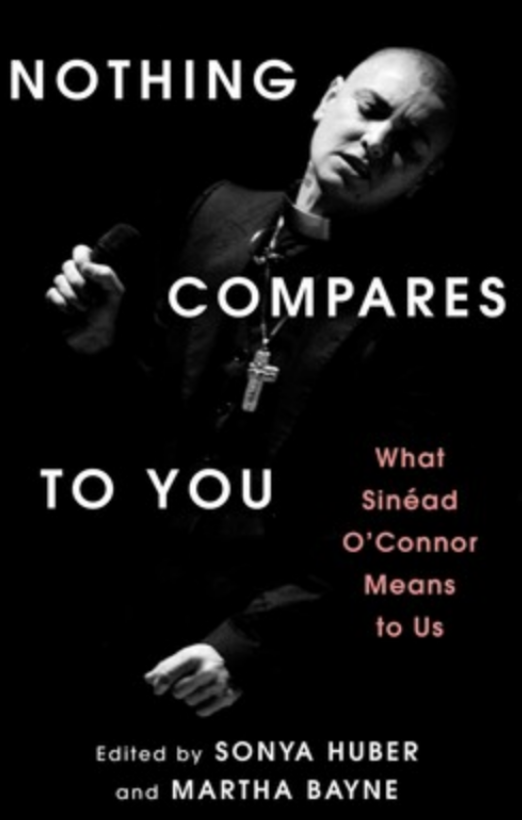
This summer, I am running a series of essays about Sinéad O’Connor to celebrate the publication of our book: Nothing Compares to You: What Sinéad O'Connor Means to Us. Martha was interviewed on WBEZ and we had an amazing feature by Allison Cuddy in the Chicago Sun Times! I also got to appear on the WGN Morning News. Chicago was so good to us!
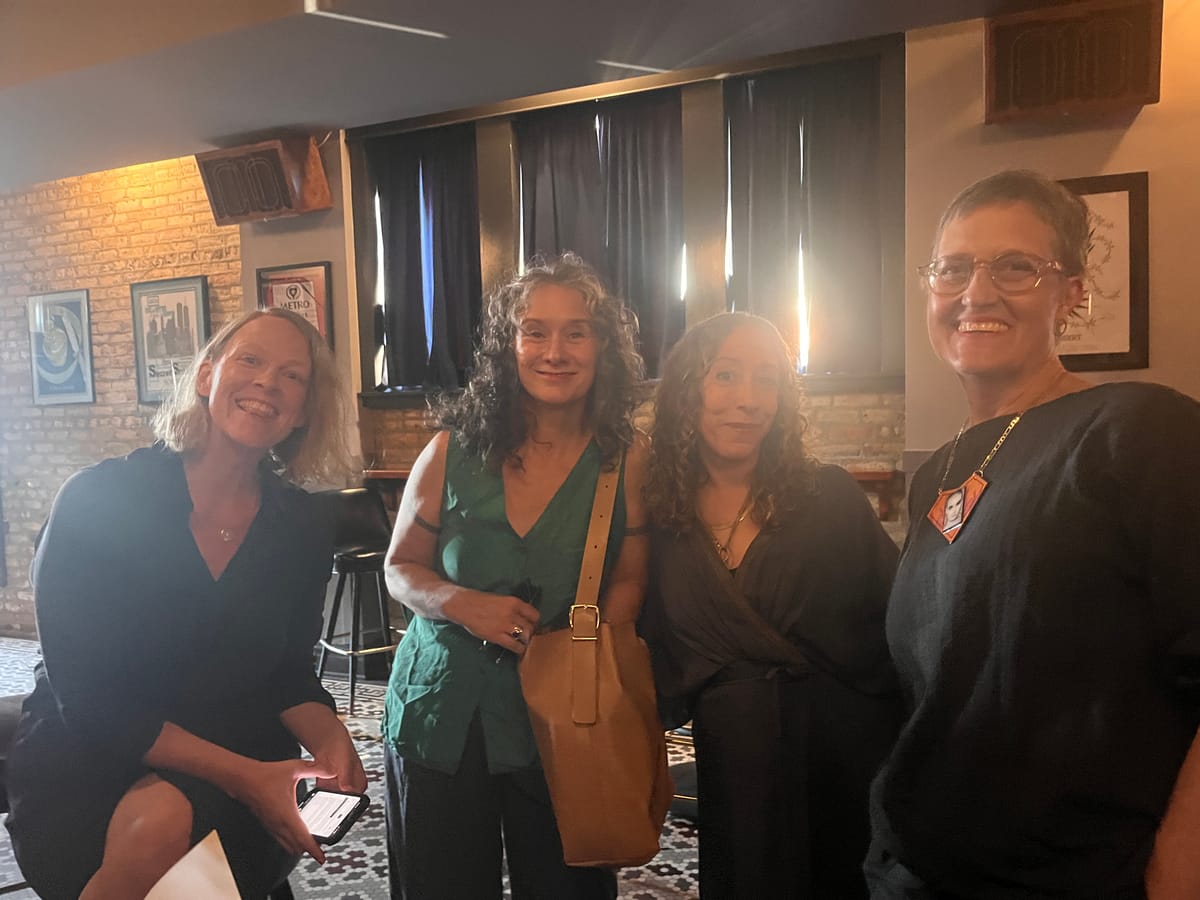
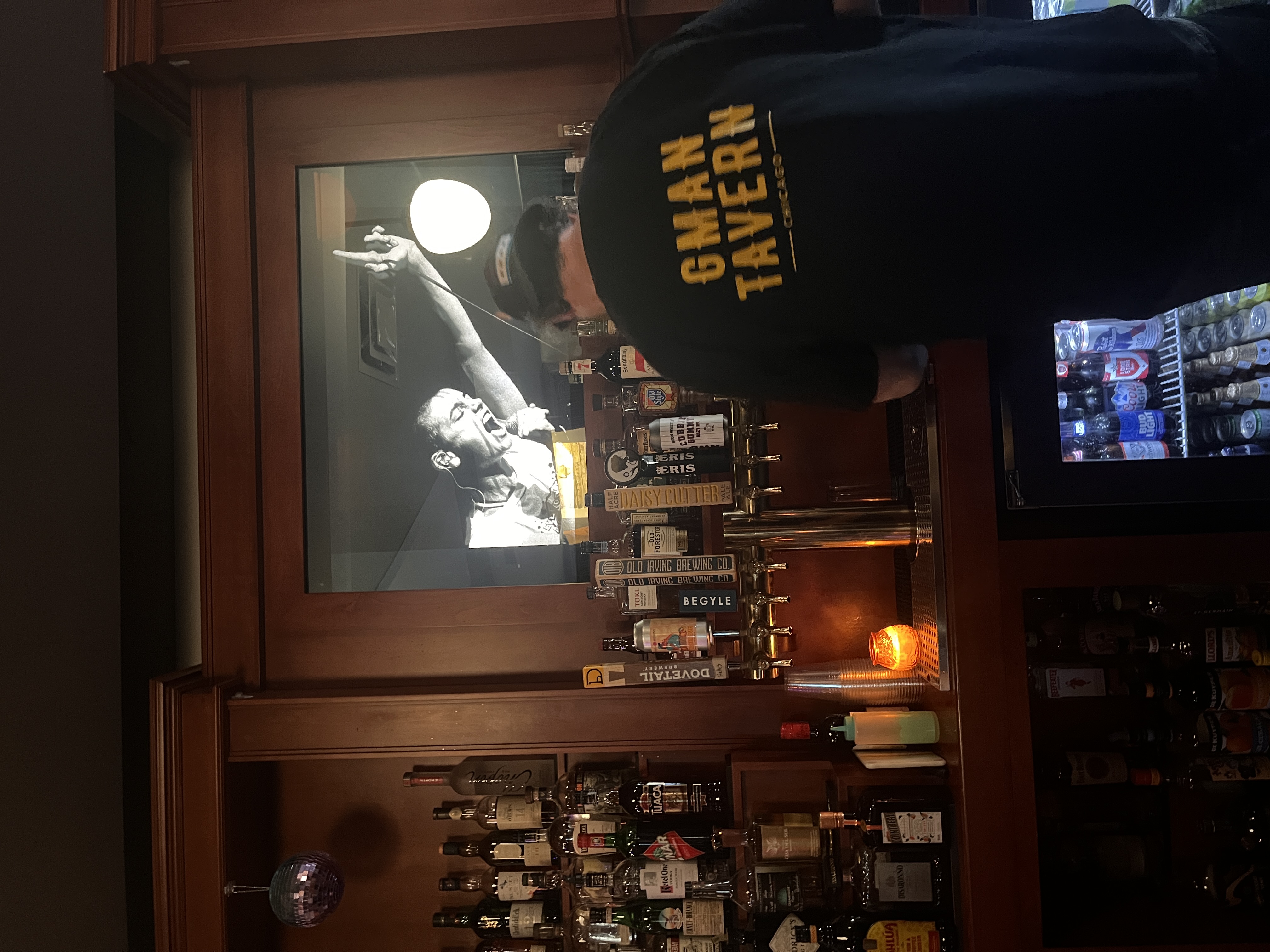
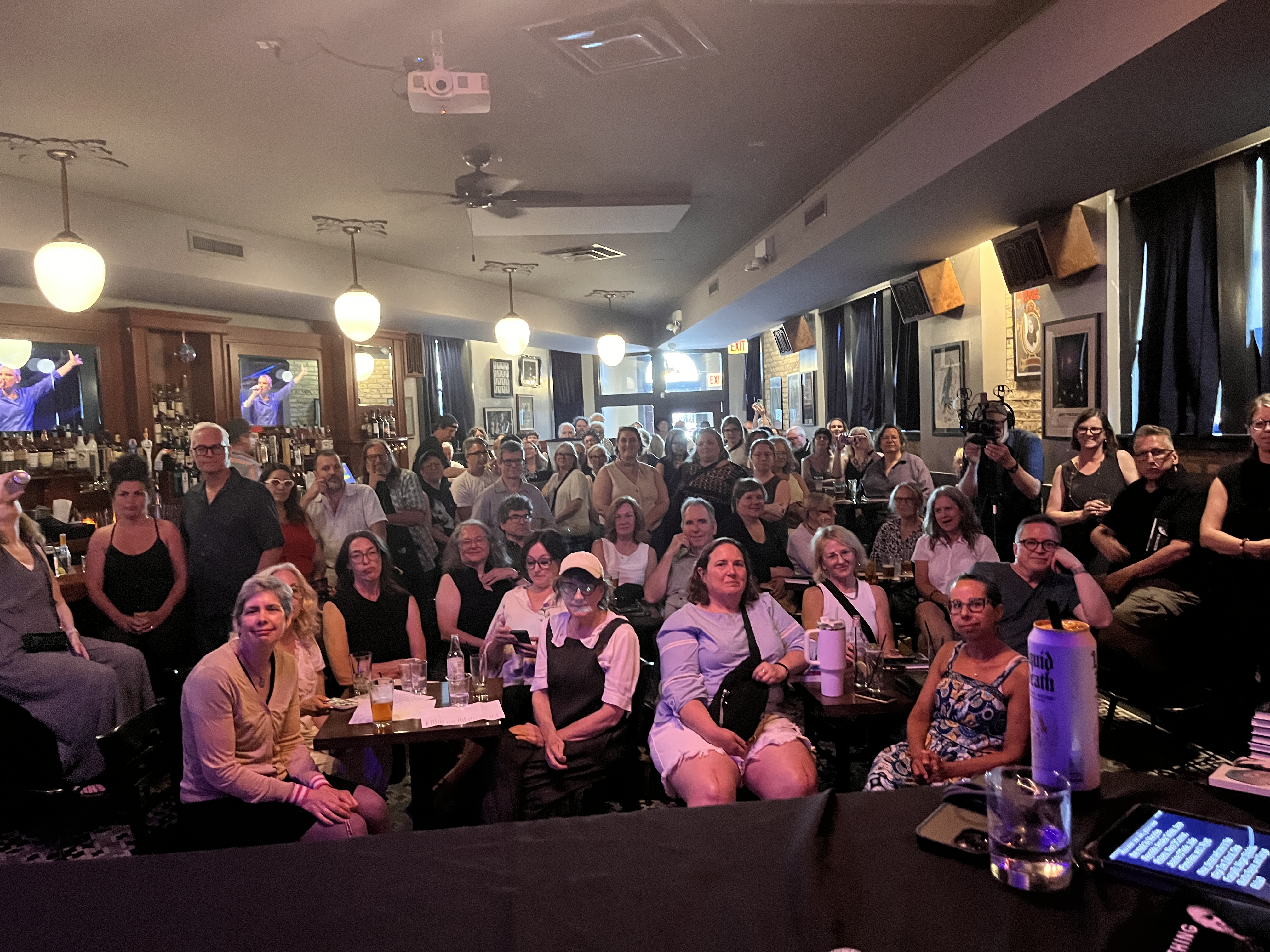
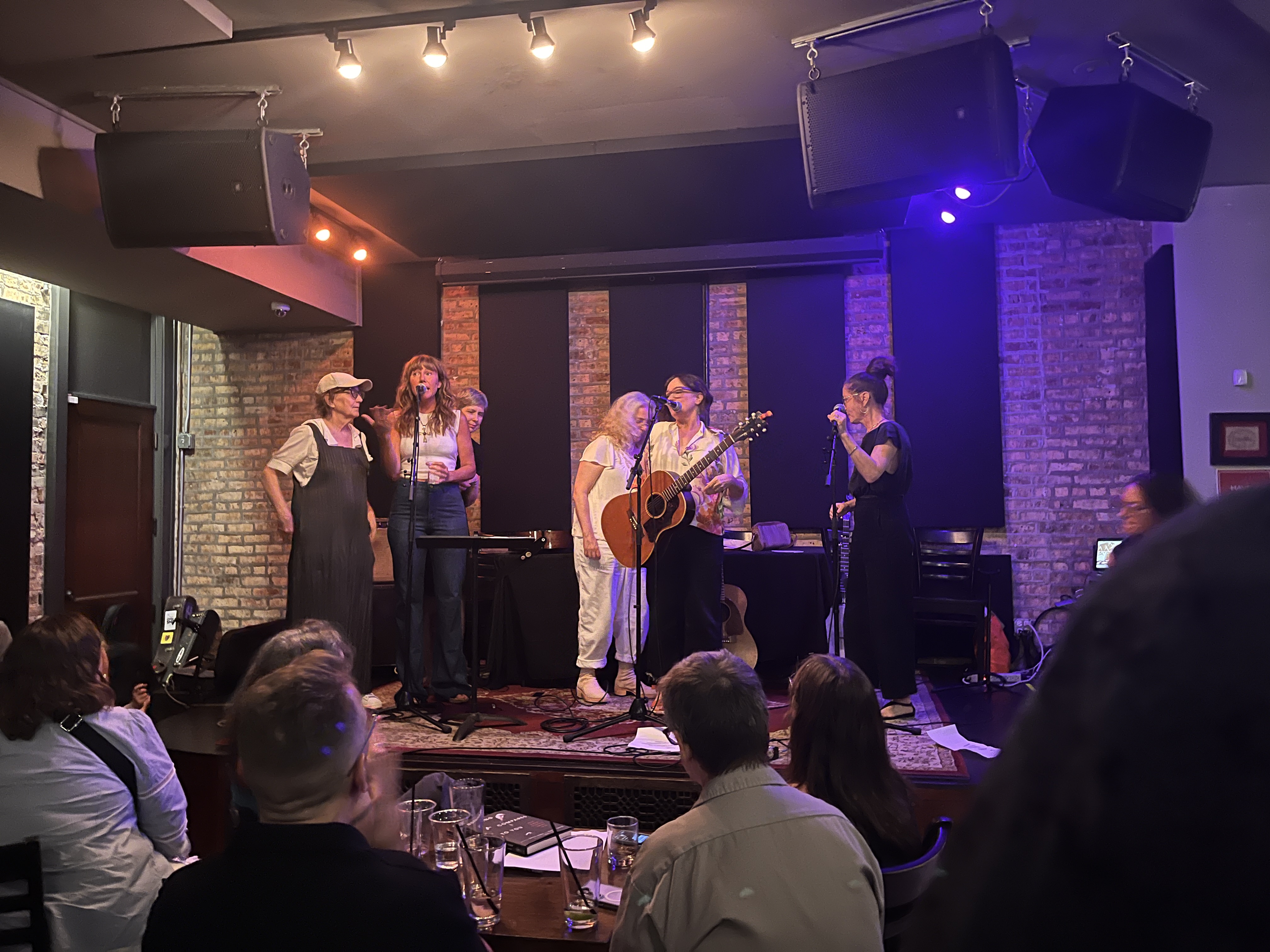
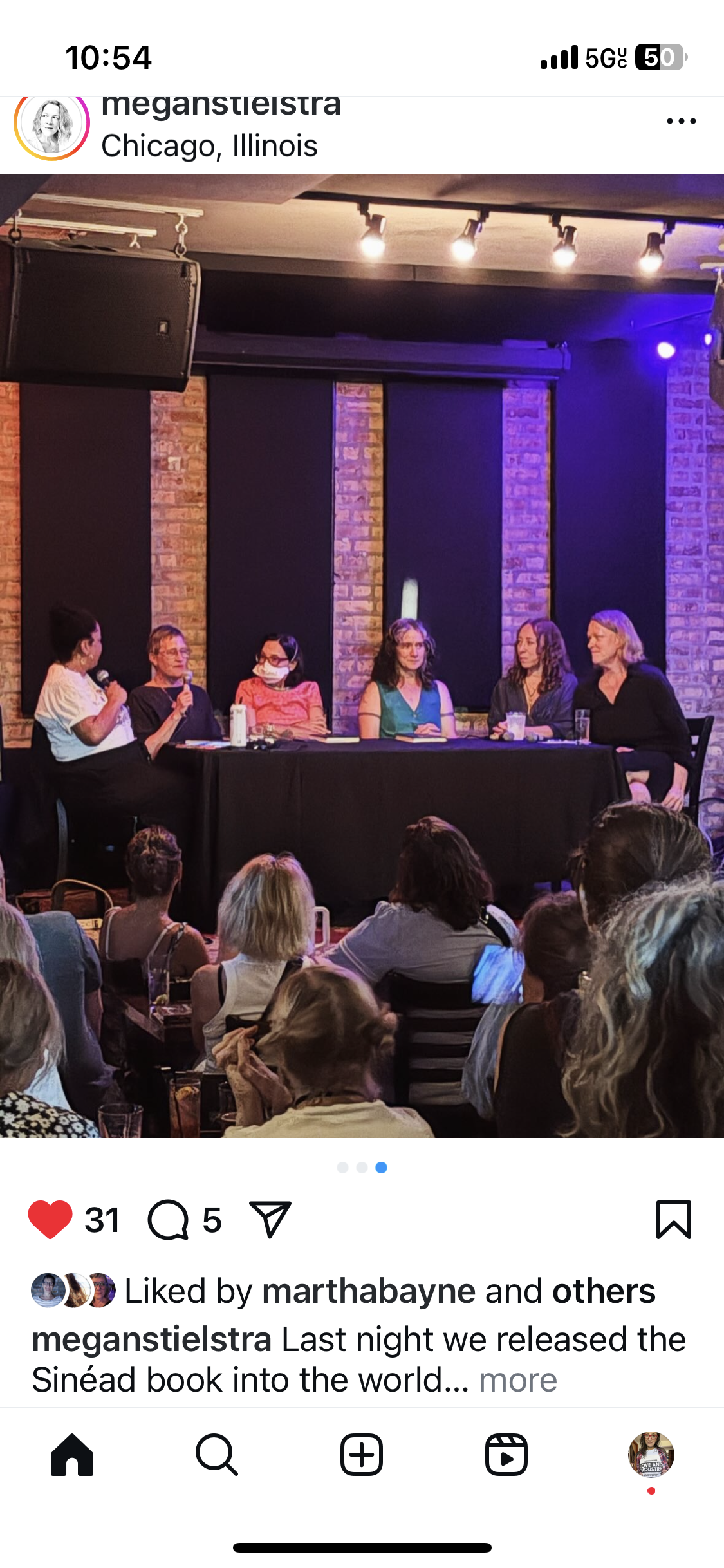
The Chicago event at Gman Tavern was INCREDIBLE. Thank you to the amazing Jill Hopkins at Metro for pulling everything together, to Amalea Tshilds, Marydee Reynolds, Jane Roberts, Nora O’Connor, Jeanine O’Toole, Eiren Caffall, Julie Pomerleau, and L. Wyatt for absolutely stunning music, to and Women & Children First Bookstore for selling books, and to everyone who came out.
I also wanted to share Jane Ratcliffe’s amazing essay about interviewing Sinéad appeared a few days ago on her Substack, .
Today we have an excellent original essay by Rebecca Kuder.
Past entries in this series:
- Noah Berlatsky’s “Sinéad O’Connor’s ‘I Do Not What What I Haven’t Got’ speaks to the fight against Trump from 27 years in the past,” which originally appeared in the Chicago Reader.
- Aimee Seiff Christian’s essay “I loved Sinéad for her wild courage and rage,” which originally appeared on WBUR’s Cognoscenti.
- Shawna Kenney’s original essay, “Feel So Different.”
- ’s essay “Stretched on Her Grave” which originally appeared on her Substack, Off the Record.
- April Nance’s original essay, “Sinéad and Barbie and Me.”
- Emily J. Orlando’s original essay, “‘You Asked for the Truth and I Told You’: For Sinéad”
- Eileen Toomey’s “In Defense of Sinéad O’Connor,” which originally appeared in The Rumpus.
- Jocelyn Jane Cox’s essay “Sinéad O’Connor Helped Me Find My Voice,” which originally appeared in in Sari Botton’s .
- Jeff Dorchen’s essay “Ketch Vampire”
- Erika Meitner’s poem “Sinéad O’Connor Was Right All Along,” which originally appeared in LitHub.
Everywhere Is War
Rebecca Kuder
Content note: factual description of child sexual abuse and boundary violation.
(for Sinéad O’Connor)
“Children are the vessels into which adults pour their poison.”
—Salman Rushdie, Midnight’s Children
Sinéad, October 3, 1992
When I was almost twenty-six, I lived in Seattle, across the country from my hometown in Ohio. I saw her do it, live on Saturday Night Live, saw her courage and power, when I was only beginning to comprehend the impact of child sexual abuse on my body and spirit.
That Saturday night, Sinéad O’Connor sang Bob Marley’s song, “War,” the lyrics adapted to condemn the Catholic Church for child abuse. And after she had our attention, she tore her mother’s photograph of Pope John Paul II to pieces.
Rebecca, early 1990s
Was it before or after I saw her performance on SNL that I confronted the man who abused me when I was nine years old? I was part of a therapy group for women who had been sexually abused as children. We talked about whether and how to confront abusers. Confronting that man was an essential stage of my healing, but the timeline is vague. Maybe it was a Sunday, between 1990 and 1993, when I made the phone call from my apartment on lower Queen Anne, the same place where I watched Sinéad destroy the Pope. Certain memories get filed outside of time.
Rebecca, early 1990s
When I called you from across the country to confront you about what you did to me when I was nine, you blamed me. You claimed that when I was a kid (when you were an adult), you came into the living room where I was watching TV, and saw me touching myself. On the phone, you presented that moment as exhibit A. As if what you saw a child doing to her own body was an invitation to you. As if the act of me touching myself gave you permission to touch me.
On the phone, you admitted what you had done to me. After hearing what I had to say, you said that I seemed very educated about this topic. You said you had been watching the nightly news reports about child sexual abuse. You asked me general questions, and expected me, the former child (whose room you crept into, and touched between the legs, and then lied to…said it was okay) to somehow explain to you what you did, and why; expected me to explain your past behavior (explain you to you), because I seemed, to you, to be an expert.
On this topic.
There was…admiration in your voice. You complimented me for being an expert on this topic, even though you were the one who instilled, in me, the need to become an expert on this topic. You were the one who poisoned my bones.
Sinéad, 1992
We find it necessary
We know we will win
We have confidence
In the victory
Of good over evil
Rebecca, early 1990s
I found it necessary
to become an ‘expert,’
in order for my spirit
to survive.
Sinéad, 1992
Her voice, her call to arms, her conscious action. How, despite whatever sensation of fear was surely willowing through her body, she stood among candles, unsilent. Despite the shame. A bold and prescient battle cry. Ahead of her time. For all of us to see.
Rebecca, 1976
When I was a child, you dated my mother, stayed over sometimes, and when you addressed her (in your nasal, cloying voice) you called her only by the first syllable of her name. Under the guise of affection you could spare, apparently, only one syllable for my entire mother. Likewise you called me ‘Beck’ and I hated it. The k at the end. The hardness of the sound. The stink of whatever you offered me.
Rebecca, 2002 (ish)
After the turn of the century, ten years after Sinéad stood and sang and tore the Pope, my mate and I hosted a community yard sale fundraiser for a friend who was running for office—Green Party long shot in a conservative state.
The candidate was also a friend of yours, which I did not know until you slid into my garage with items to donate. You asked our Green Party friend to call me outside because you wanted to say hello. Hello to me. You introduced yourself to my mate and reached out and shook his hand. He was shocked. I had to write a spell and cast you out, burn sage. I had to write you a letter, to remind you we are not friends, to command you never to speak to me again.
To remind you what you did to me when I was nine.
In case you forgot.
Rebecca (undated, eternal, still, always)
You poured what had happened to you into me. You didn’t ponder how the pouring would make me feel, the shame that would sheet over me for the rest of time, the discomfort that would cover my body until I actively threw it off, and reminded myself (over and over) that your words were a lie.
You lying liar.
You lied to my body. When I was nine and you touched me, you said, ‘This might feel good, and that’s okay.’
Nothing about what you did was okay.
You lying liar.
You poured undigested poison that you yourself had received—decades earlier, from the Catholic Church—into me, into the vessel of my body. Watered down wine, laced with a poison I did not order.
Body of martyr, blood of lamb, all those parts and stories blur, and too often in the offering there’s some hidden poison.
You did not take my blood, but you poisoned my bones, my body’s memory.
Maybe because I did not receive body and blood and poison directly from the Church (from the hands of those who leadeth, eventually, to God), I never blamed their miraculous fictions, not really. Until you told me what had happened to you, when you were still an innocent Catholic boy.
Personally, I have no truck with the Church. But if only you had been able to endure your suffering and not pass it on, to alchemize the poison you were given as a child. If only if only if only.
You were once a child, like me. Like all of us.
And still, I blame you. You grew up. You could have broken the lineage, the offering, the legacy. If only if only if only.
We feel it in ripples, generations, but who can know what was done back and back through each person, back to the first? Where did this rot start? Where does it end?
Rebecca, early 1990s
Back in the 1990s, even though survivors were beginning to emerge from the shadows of shame, still, how hard it was for me to speak about what happened to me. But I did. I do. (We find it necessary.)
I remember how I felt back then, and celebrate how much lighter I feel now.
Rebecca (undated, eternal, still, always)
On the phone in the 1990s, you said you heard that it passes from person to person. As if inevitable, a contagion, a thing you could not help passing to me or someone. On the phone, after you evaded the question and after (nevertheless) I persisted in asking, you admitted there were others. Other children. (You had nine children of your own. I did not ask who the others were, I just needed to know it wasn’t only me.) On the phone when you talked about how it passes, I told you I am not going to pass it on. On the phone I told you that I was ending the cycle.
You did not end it.
You poisoned me against the sunshine of myself.
You rank and rankle liar, you lied to parts of me that, each day, I must convince are not wrong, twisted, dead, or dying. You poured lies into my body. You poisoned my body against itself. You obscured what light would have kept me warm and whole.
I evicted as much poison as I could, and patched and put myself back together.
Rebecca (undated, eternal, still, always)
Over many years, I have been able to move through and metabolize what happened. I have had a lot of support. Like Sinéad, I have learned to use my voice.
Sinéad, 1992
Despite what it cost, she led us with nobility.
Rebecca (undated, eternal, still, always)
I am a survivor of childhood sex abuse.
When I was nine, I was molested by an adult. Years later, after I confronted the man, I also called Child Protective Services and spoke his full name, every syllable, for the record. The woman on the phone at CPS said I could still press charges, but I decided that would not help me heal. Enough that his name was on file somewhere, in some machine, in case someone else brought a case and needed backup. (I assume that record still exists, somewhere.)
I am grateful for any good love that surrounds survivors, healed and healing. Grateful for what enables us to stay here and be healing (healing, a verb in the present). I am grateful to exist at a time when Sinéad O’Connor, human and artist (who, like all of us, was once a vulnerable child) also existed. Beyond her music itself—a potent container for our brokenness and our rage—being a survivor is one reason I feel the quake of her death.
Rebecca (undated, eternal, still, always)
And still.
Everywhere is war. And the rumors of war.
Rebecca Kuder is the absolute mistress of her own body. Her books include The Eight Mile Suspended Carnival (What Books Press) and Dear Inner Critic: a self-doubt activity book (Literary Kitchen). Her shorter work has been published in Los Angeles Review of Books; Hags on Fire; Bayou Magazine; Shadows and Tall Trees; Year’s Best Weird Fiction; The Rumpus; Crooked Houses; and elsewhere. She received an MFA from Antioch University LA and an individual artist excellence award from the Ohio Arts Council. Rebecca is also a writing coach. She lives in Yellow Springs, Ohio, with the writer Robert Freeman Wexler and their child. (Visit www.rebeccakuder.com.)

- August 6, 2025 @ 7 pm: Westport, ConnecticutLaunch and conversation with Sharbari Ahmed, Sonya Huber, and Nalini Jones. Westport Public Library, 20 Jesup Road Westport, CT 06880 203.291.4800
Let me know if you have any questions, if you want a review copy, if you want to host an event, or anything else!
xoxoxox
Sonya