Sinéad and Barbie, Sinéad and Edith Wharton!
Read these great essays about Sinéad O'Connor and send us your writing!
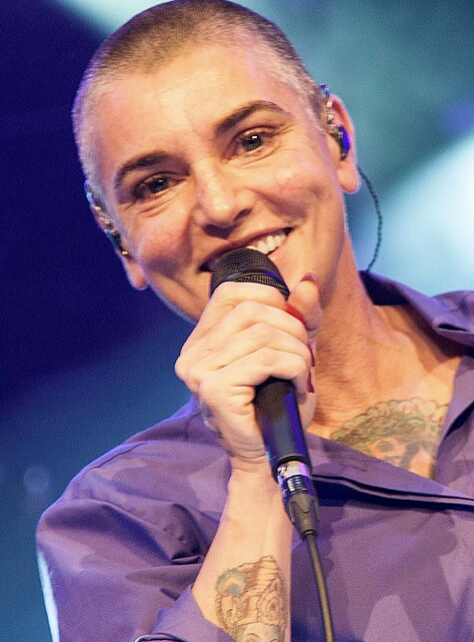
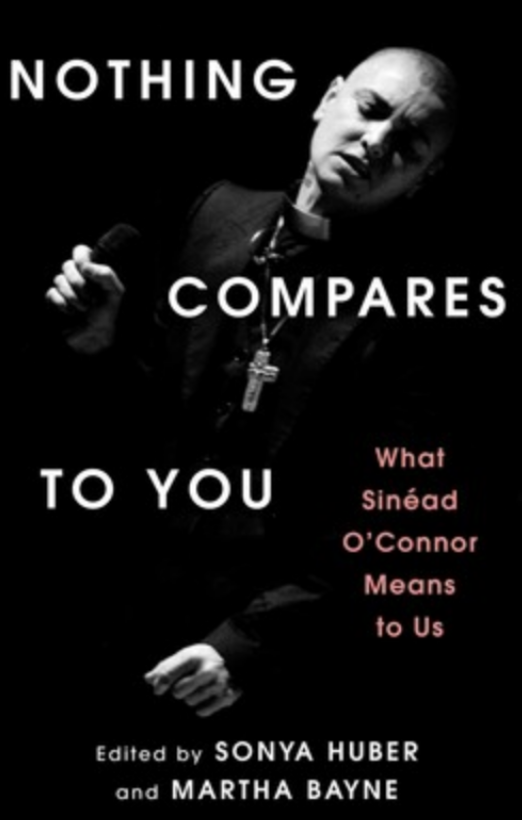
This summer, I am running a series of essays about Sinéad O’Connor to celebrate the publication of our almost-here book: Nothing Compares to You: What Sinéad O'Connor Means to Us. AND, lest I forget to mention, the book is out in a few weeks, and you can pre-order at Barnes & Noble, at Bookshop, or at your local bookstore!
Today we have two great pieces, one by Emily J. Orlando and one by April Nance. They work so well together because they’re both putting Sinéad in dialogue with another icon. The triad is a fascinating one, with artists and art forms reckoning with the impact of rebellion and its joys and consequences amid the threat of containment.
Past entries in this series:
- Eileen Toomey’s “In Defense of Sinéad O’Connor,” which originally appeared in The Rumpus.
- Jocelyn Jane Cox’s essay “Sinéad O’Connor Helped Me Find My Voice,” which originally appeared in in Sari Botton’s .
- Jeff Dorchen’s essay “Ketch Vampire”
- Erika Meitner’s poem “Sinéad O’Connor Was Right All Along,” which originally appeared in LitHub.
Do you have an essay, flash piece, or a few paragraphs about Sinéad you'd like to share? Please send pieces of 2,000 words or fewer to sineadanthology@gmail.com. We’d like to run these through the summer so you can consider the deadline to be August 31, 2025. Pieces selected will appear in Summer 2025 as they are received on Sonya Huber's Substack “Nuts and Bolts.” All rights revert to the author after publication, and if at any point you need us to take down your essay for the purposes of future publications, we will be happy to do so. Compensation for those chosen for publication will be one copy of the hardcover anthology.
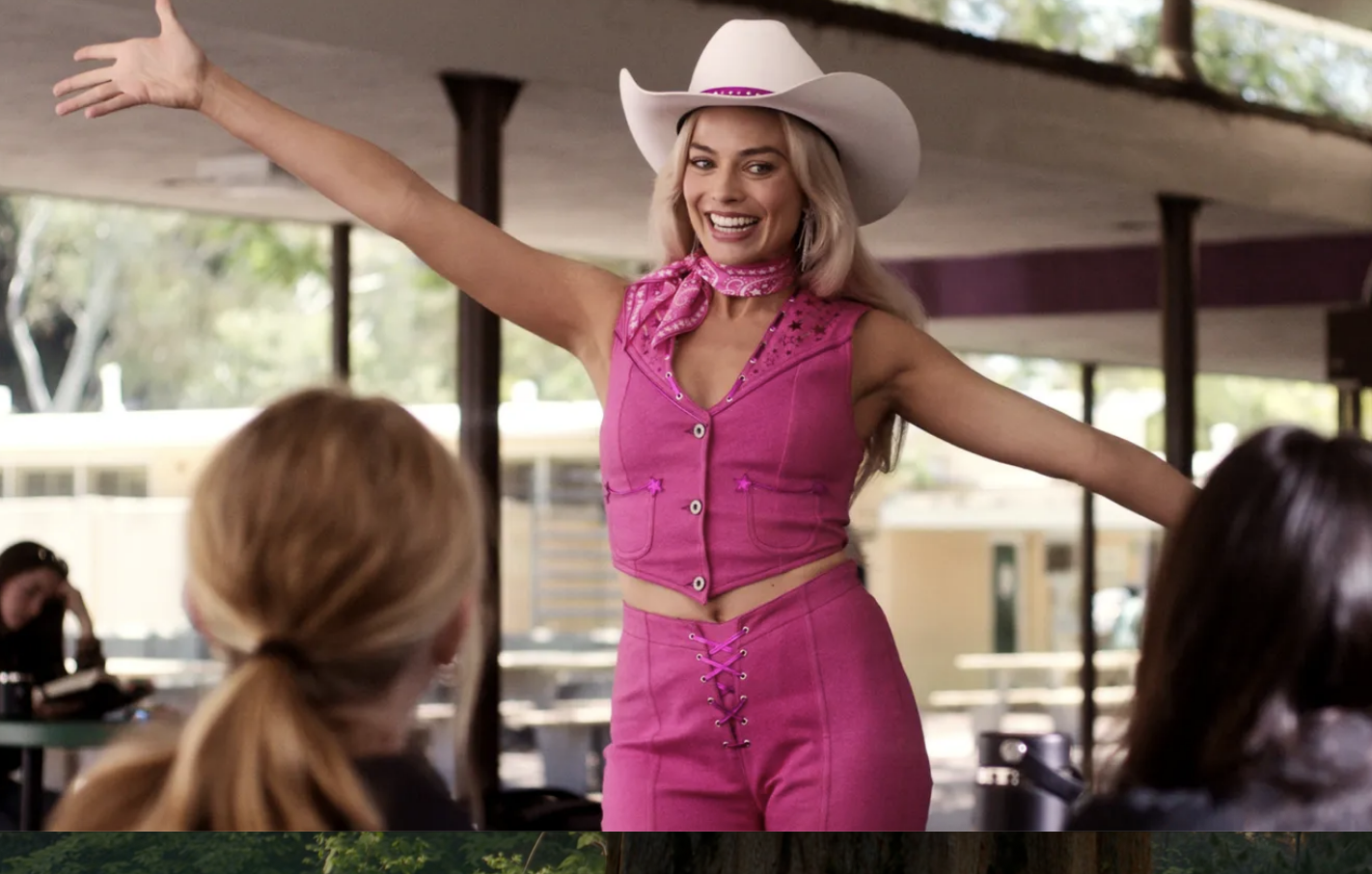
Sinead and Barbie and Me
April Nance
The movie Barbie broke all opening weekend records at the box office the same week that Sinead O'Connor died.
Barbie
The movie was funny and campy and skewered the patriarchy in that just right, socially acceptable way. It was an entertaining 114 minutes.
I played with Barbies as a child and it probably instilled in me an unrealistic and shallow perception of feminine beauty, but more than that, it stirred up feelings of envy. I wanted the Barbie stuff my classmates had. I had one Barbie and a few sets of clothes and a couple of pairs of shoes. I pined over the dreamhouses and the campers and the convertibles that filled “playrooms” in my friends’ houses - actual whole, carpeted rooms meant for nothing but play. Also in these houses were refrigerators with icemakers and water dispensers BUILT IN the door. Going over to friends’ homes to play with Barbies opened a portal to a world that I did not live in and quite possibly woke up in me some existential emptiness that consumerism has been hoping to fill ever since. My own family teetered on the edge of being middle class. Don’t get me wrong - we had plenty. I was the youngest of four. My father was a mail carrier and my mom was a homemaker most of her life. We had a roof over our head, food to eat and clothes to wear, and at Christmas there were packages under the tree. We even got to eat out at Pisgah Fish Camp every two weeks on payday Friday and go to Myrtle Beach every summer. My two sisters and I shared a bedroom; my brother had his own room; and my parents slept in the attic. There was one bathroom for all six of us to share. The center of our homelife, especially in the winter, was around the woodstove in the living room. By the time I was old enough to play with Barbies and go to sleepovers, I started to notice that some people had more than we did.
As I grew older, I wanted nice clothes and I wanted the attention of boys - just like Barbie. I got a job at Domino’s Pizza when I was 15 and my paychecks went to Guess jeans, Forenza sweaters, and add-a-bead necklaces. I was not dependent on hand-me-downs and what my parents could afford. As for the attention of boys, specifically skateboarders, I adapted myself to the person they would find attractive. If they were hanging out at Playworld, the seedy arcade on Merrimon Avenue, that’s where my girlfriends and I would be. If they were listening to the Beastie Boys, that’s what I was listening to. (And let me just tell you - the album Licensed to Ill has not aged well from a feminist perspective).
Sinead
On the night the news broke that Sinead O'Connor was gone, my best college friend Jacqui texted me: “Nothing Compares 2 U” was the most beautiful thing that happened during our sophomore year. I agreed. If you were not moved by Sinead's soulful interpretation of those words written by Prince, I have to question whether or not you have a pulse. When the video for the song was announced as “coming up next” on MTV, Jacqui would call me and I would rush over to her dorm room to watch it. Sinead’s face filled the screen with a performance that brought tears to my 20-year-old eyes.
That was the gateway song for me and I went on to love every song on the album I Do Not Want What I Haven’t Got. In that collection of songs Sinead sings about the search for self, the injustices of the world, relationships and spirituality in ways that sparked something in me. What resonated most was that she was living in her own experience and writing about it, not adapting to the world or her partner and what they wanted. Her words were raw and honest, angry and truthful. I didn’t know what agency meant at the time, but I craved it, even as I spent my time seeking permission, validation, and assurance from others. I was waking up to the idea that there was more to life than reacting to it.
Barbie and Sinead and Me
The obvious juxtaposition is that Sinead is the anti-Barbie. She shaved her head and would not be censored. Given her physical beauty and musical talent, her trajectory could have been different but she refused to behave and could not be packaged in a way that fit our culture. Instead, she produced an album called “I Do Not Want What I Haven’t Got.” The title alone is a subversive statement in our capitalistic society. And yet, if not for the smash hit of “Nothing Compares 2 U,” I and millions of others probably never would have heard her music.
There was an expansiveness to the way Sinead bared her soul (even when, especially when) she knew she was setting herself up for attack. She infamously ripped up a photograph of the Pope during a performance on Saturday Night Live to protest child abuse at the hands of the church. She was canceled before being canceled was a thing. Sinead wrote about police brutality and racism rooted in systems of government. She sang like an angel - not a sweet, precious one, but one who sees the beauty and horror of living, and refuses to look away.
Sinead tells us in the first line of that album that she is not like she was before. It reminds me of the Joan Didion quote about staying on speaking terms with other people you’ve been in your life. I look back with love and grace at the little girl who wanted more even though she had all she needed in the arms of a loving family. I look back with love and grace at the young woman who thought she had to adapt herself to the needs and desires of men and popular culture. And now, I have love and grace for the woman who wants to sit, write, and rest - just as Sinead sings in "The Emperor's New Clothes."
Sometimes we need objects like Barbie in the same way that we need unevolved religion. We need something to deconstruct and reorder. If we’re lucky, prophets like Sinead O’Connor help us along the way.
April Nance is a native of western North Carolina. She serves as Lead Storyteller at Haywood Street Congregation, an urban ministry in downtown Asheville, NC, whose mission is: relationship, above all else. As a writer, April is drawn to reflecting on the stuff of everyday life, and how personal stories provide insight into our collective past and the future. Her essays have appeared in the Great Smokies Review, The Dewdrop, and the Creative Nonfiction Podcast Audio Magazine.
Instagram: @aprilswindow Substack:
“You asked for the truth and I told you”: For Sinéad
Emily J. Orlando
When I first heard Sinéad O’Connor ask how she could possibly know what she wanted when she “was only twenty-one,” I was turning that age and contemplating that question. It was summer 1990 and the song—“The Emperor’s New Clothes”—still speaks to anyone who’s been gaslit while speaking truth to power. I remember spinning my Gen-X self around my bedroom, feeling her indignance in my bones and lungs. At that age I was increasingly attuned to conspicuous displays of hypocrisy and inequity. We had a Gulf War on top of a Cold War and within a year many of us would be gutted by Anita Hill’s testimony in the Clarence Thomas hearings.
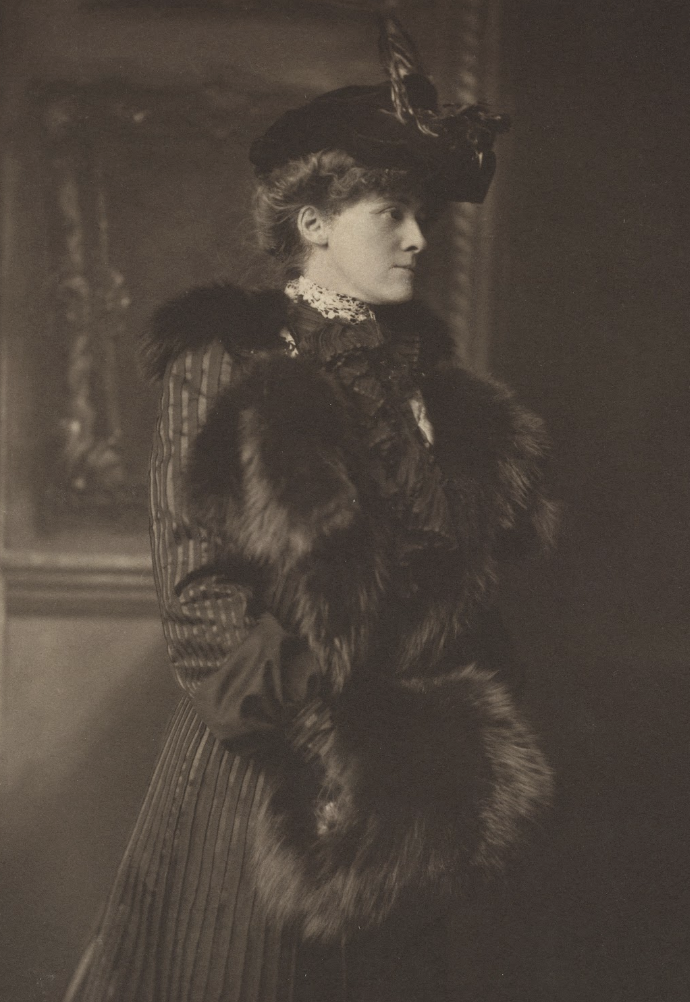
Not long after I discovered Sinéad’s voice, I would encounter that of the American realist Edith Wharton, whose work has fueled some of my best writing and teaching. Both women were fearless and anti-sentimental in their story-telling. What self-possession Sinéad must’ve had to declare “they laugh ‘cause they know they’re untouchable not because what I said was wrong” and to own her “clear conscience” and ability to “sleep in peace.” Edith Wharton, born a century earlier, had also come to prominence in the early ’90s—that is to say 1890s—and would establish herself as a self-made artist and household name in a field that didn’t always welcome her. Like Sinéad, Wharton lifted the veil on exploitation, deception, and injustice. Neither woman suffered fools. A little-known fact about Edith is that she prized “justice” as a “ruling passion,” along with order, dogs, and a good joke. These women came from radically different worlds but their art did something similar for my 21-year-old awakening conscience.
How I wish I knew then the context that made Sinéad tear up a photo of the pope on SNL and overnight become what’s now called “cancelled.” It would be a decade later that my hometown paper, the Boston Globe, would uncover the sex scandal that would compromise the Catholic Church’s reputation. I now appreciate what Sinéad meant when she compared Ireland, in her memoir, to an abused child.
When last I was in Dublin, shortly before O’Connor’s passing, I saw graffiti apologizing for not listening: “We’re sorry, Sinéad. You were right.” It was equal parts vindication and heart-break. I like to think that in some parallel universe Sinéad sees that the widespread corruption she exposed is now accepted as truth. At the very least, I know she is sleeping with a clear conscience and in peace.
And now we find ourselves with more than one nude emperor whose cronies applaud their wardrobes, snickering because they know they’re untouchable, not because what Sinéad said was wrong. Her words—like Edith Wharton’s—hit as presciently as ever. “You asked for the truth and I told you,” she sings in that final verse. Maybe we can join her chorus and sing truth to power.
Emily J. Orlando, PhD, is a professor of English and the E. Gerald Corrigan Chair in the Humanities and Social Sciences at Fairfield University. She is the editor of The Bloomsbury Handbook to Edith Wharton (available in paperback April 18, 2024), editor of The Decoration of Houses by Edith Wharton and Ogden Codman Jr (available October 18, 2024) and the author of Edith Wharton and the Visual Arts. More at www.emilyorlando.com
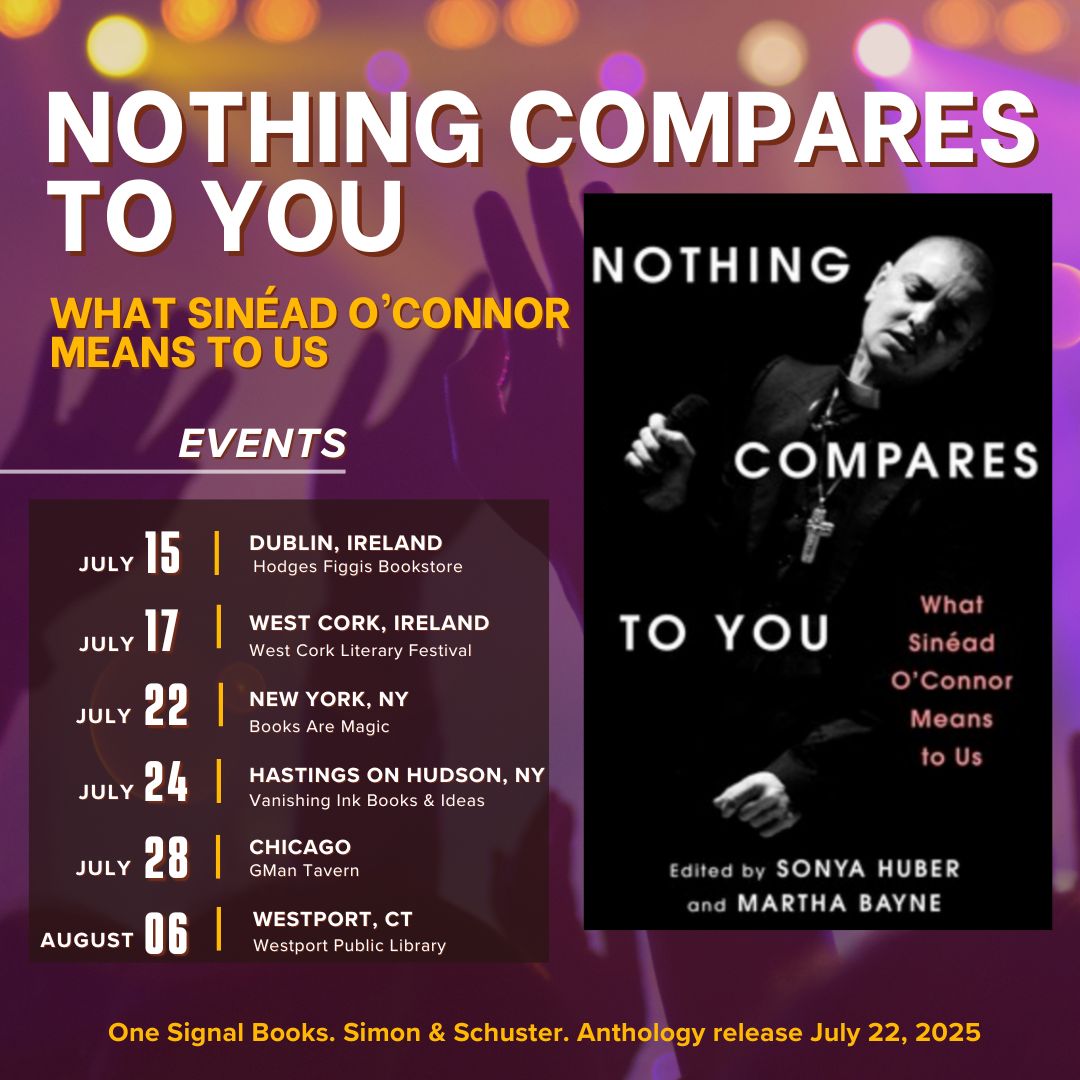
We’ve got more events and we hope you will join us for some!
- July 15 @ 6 pm: Dublin, IrelandHodges Figgis Bookshop: Martha Bayne, Mieke Eerkens, Sinead Gleeson, and Allyson McCabe in conversation with Una Mullaley
- July 17, 2025 @ 8:30 pm: Bantry, IrelandWest Cork Literary Festival: Martha Bayne, Mieke Eerkens, and Allyson McCabe in conversation with Eoghan O'Sullivan
- July 22, 2025 @ 7 pm: New York, New YorkBooks Are Magic, 122 Montague St., Brooklyn, NY 11201. Launch event with Sharbari Ahmed, Martha Bayne, Sonya Huber, Porochista Khakpour, Millicent Souris, and Zoe Zolbrod, with musical guest Monique Bingham. And on YouTube live!
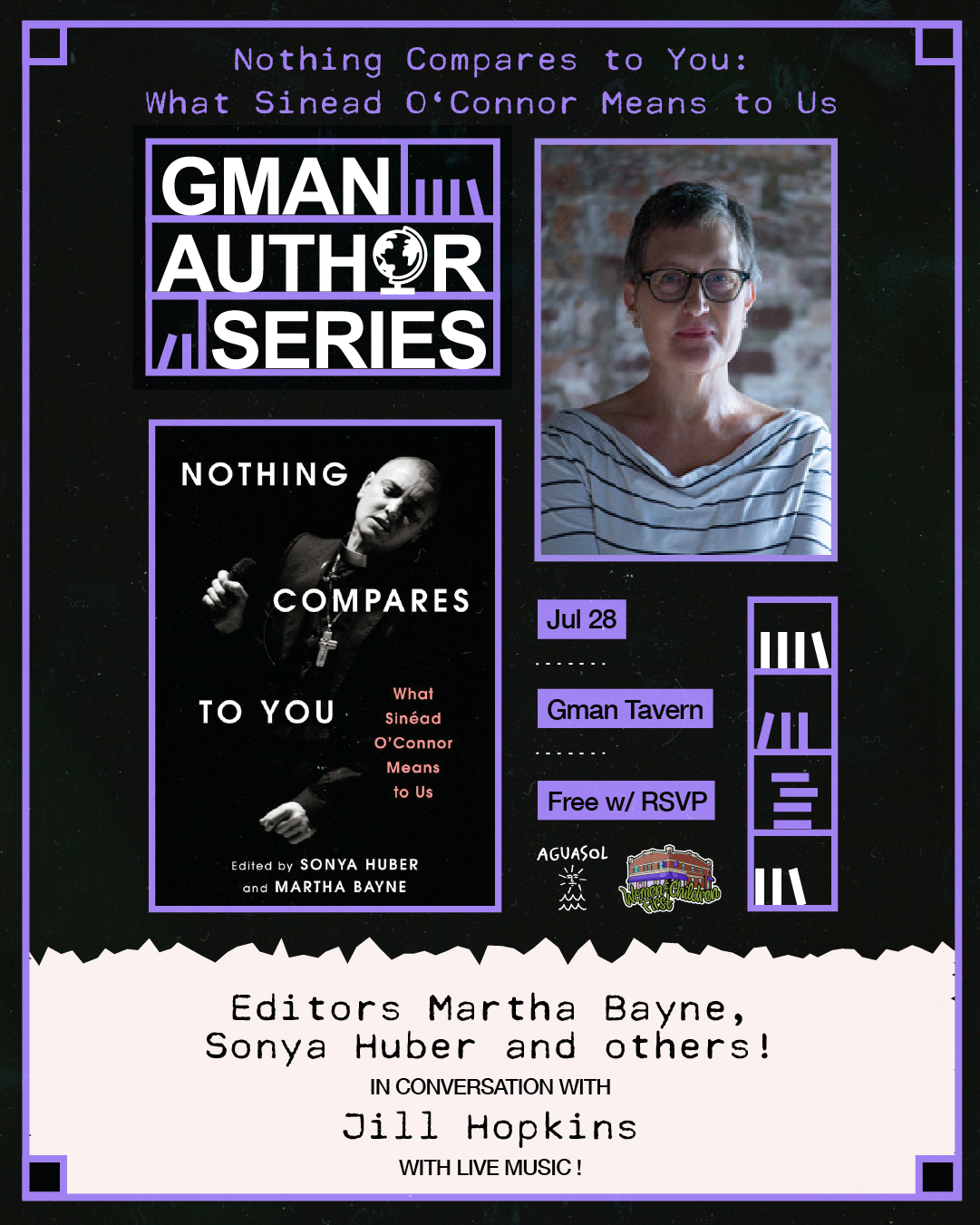
- July 28, 2025 Doors @ 6:30, Show @ 7:30: Chicago, IllinoisGMan Tavern: (Bar attached to Cabaret Metro) Book talk and party with Martha Bayne, Sonya Huber, Zoe Zolbrod, Megan Stielstra, and Gina Frangello -- plus musical performances of Sinead O'Connor songs by Amalea Tshilds, Marydee Reynolds, Jane Roberts, Nora O’Connor, Jeanine O’Toole, Eiren Caffall, Julie Pomerleau, and L. Wyatt. 3740 N Clark St. | Chicago, IL 60613
- August 7, 2025 @ 7 pm: Westport, ConnecticutLaunch and conversation with Sharbari Ahmed, Sonya Huber, and Nalini Jones. Westport Public Library, 20 Jesup Road Westport, CT 06880 203.291.4800
Let me know if you have any questions, if you want a review copy, if you want to host an event, or anything else!
xoxoxox
Sonya