Things I'm Doing Differently This Time
Sequels Almost Always Suck
Can you believe this shit started eight years ago? Neither can I. And here come four more. Understandably, many of us are anxious, in denial, and trying to grab pockets of joy while we can, to try to save moments of calm to tide us over into the dark time. I think anyone who’s been paying attention knows that the wishful thinking of “Maybe it won’t be that bad” won’t save us. In fact, anyone who’s saying that—after seeing what 2016-2020 was like—may be veering a little too hard into fantasy land or might have such enormous privilege that they might already have purchased an island.
In 2016 I stared at the problem through Twitter, shocked and appalled at each new violation of common sense, wondering when things would snap and unspool. At one point, when he pulled us out of the Paris Climate accord, I sobbed on a bus amid strangers. But often I’d look at records and commentary on the horrors until I went to sleep, which was a bad choice! So here are my advance commitments to myself, and I’m offering them in the hopes that they might help you.
Social Media and News Time-out: This time around, I know a lot more about the bottom of my anxiety, and that if I get there, it will also quickly take my physical health apart. One thing I’m already doing is that when I’m lying on the couch at night, as part of the long rest I now need before going to bed, I pull myself back from checking social media. I have had success with this, unlike so many times before, because I think of it as touching a hot stove, something that will actually harm me. I know there’s information there that my morning brain and body can process in a way that my evening brain and body cannot.
Hard copy: In the past few weeks I’ve subscribed to a few print magazines, which I hadn’t been doing at all, and as I lay down reading the New Yorker last night, I had a delicious hit of what I can only call a visit from media ghosts past. I felt held by the narrative of the magazine as a whole, its composition and its physical presence, and it was a good thing to have on my reading stack when I needed distraction. And it’s true: no hovering links, no impulse to skitter off to check email on another window.
Areas of expertise or focus: A group I’m a part of has started talking about this sage advice, which I first heard in 2016. Pick a focus issue or two, those things that you’re already up to speed on, and know that you’ll be active and advocate on those concerns specifically. It’s going to be too much to have to keep minute-to-minute awareness of all the breaking, all the destruction, that will happen. Sometimes you’ll check email or social media and it will take you down paths of horrors that will overwhelm you—that’s unavoidable. But for me, healthcare policy and health access are two fields where I already kind of know the lay of the land, and so in some way I have access to the “what now” that will be triggered when destruction starts to happen. Do you have a field that you know well, or a field that you care about especially? You could pick that, and maybe even save links of helpful articles, or start to cultivate folks to follow on social media who are contributing to meaningful dialogue and solutions.
Bonus! Since my area of expertise is health and health policy, I’m going to urge you to check this chart from the CDC (which is still somewhat reliable and soon will not be) about the vaccinations you should be getting. If you’ve gotten shots at CVS or Rite Aid, you can sign in to see your vaccination history. If you have teen or pre-teens, get them the HPV vaccine now—it’s a two-shot sequence. If you’re older, like me, make appointments to get your covid update, RSV, pneumonia, shingles, and a TDAP (whooping cough) update (that last one should happen every ten years.) There’s new evidence that older folks should get a covid booster every 6 months. This is self-care and will give you a tiny sliver of psychic safety, and I’m taking all the slivers I can get.
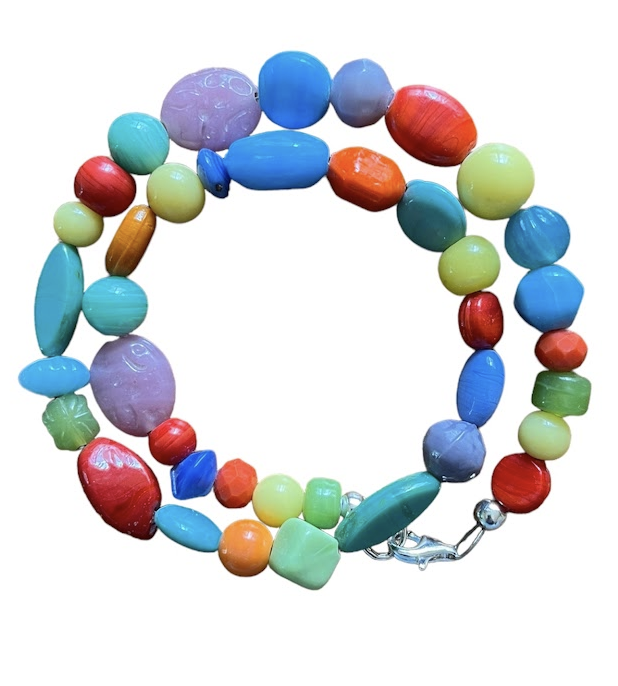
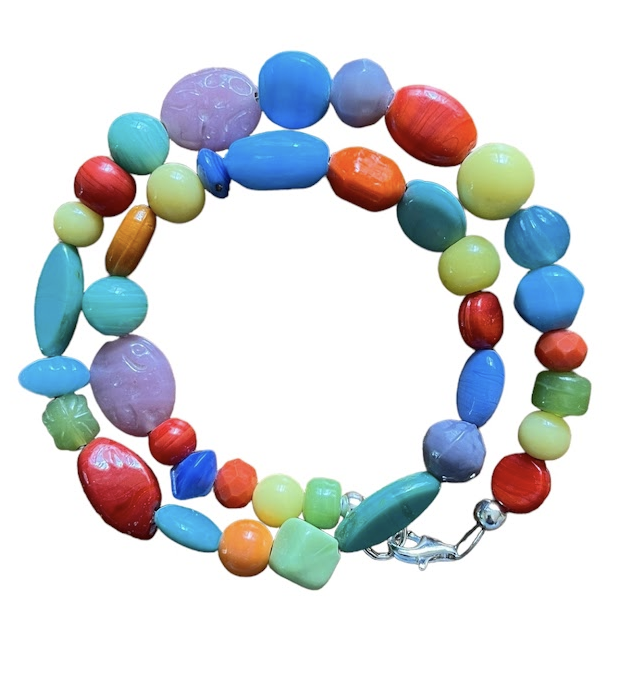
Offline Hobbies: This sounds silly, I know, but I’m going to need beads and jewelry more than ever. This crafting I do requires me to flip channels in my brain, and forces me to think with a part of my brain that is right here, in the present, and attuned to color and shape. Certain steps require total focus and immersion, and actively stopping thinking about everything else. Writing—which is my love but also my work and one of my political means of expression—sometimes leaves me feeling open to the worries of the world. Another thing I really love is feeding the birds. It’s not rocket science, but it forces me to attend to something that’s a step removed from survival, and I also have one of those birdhouse cameras that takes videos of the birds who visit. So I can check my bird-mail, which is a lot more fun than email. Pick something goofy: do you want to learn to make a latch-hook rug? Do you want to get some clay? Do you want to knit things to give away? What about writing hand-written letters to people you love?
Some visual or ritual of release: Sometimes, at the end of the day, because I love rocks and stones, I will lay in bed and imagine stones falling from my body, from my toes and fingertips and head. If I have worries, I just picture them falling to the floor. I can pick them up in the morning, but for sleep, I need that visual image. Other people use a “god box,” which I also have: just a container. You write your horrors, aches, and worries on slips of paper and put them there for safe keeping. It seems like silly, but my brain really, really likes the idea that a worry is over there, at the other side of the room, contained on a piece of paper in the small blue pottery bowl with the lid. Somehow it feels like more than me is carrying it.
A big project: During the first four years, I committed to reading all the work of John McPhee, one of my favorite nonfiction writers. It was a really wonderful container, because I knew how many books I had ahead of me, and I felt held by them. McPhee’s writing is very physical and grounding, and I find it soothing, so having that external structure helped contain the jagged days. I don’t know what mine will be this time, but asking the question gives my brain a prompt to mull this over.
A local group to serve: I ended up creating a local mutual aid group for my town during the pandemic, and that has been re-activated, and I’m connected with mutual aid in neighboring towns. But I also respond to help requests in other local groups, and bringing food to the food pantry or doing toys for tots or even helping people find basic services where I live does my heart good. Find a group in your town—a food pantry, a shelter, a women’s or lgbtqia+ center—and reach out now. Say you’d like to be on their list, on call. Those moments of bringing physical things to offering assistance to people where I live are now the main bright memory I have from the first four years, active moments of human-to-human contact, that also reset every day my awareness that people are wonderful, each a bright miracle, and that might be the thing we’re going to most need to remember.
What are your structures, your containers, the nuts and bolts of how you may navigate the days ahead?