What We Save When We Organize
Afghanistan, the Ancient Greeks, and Us
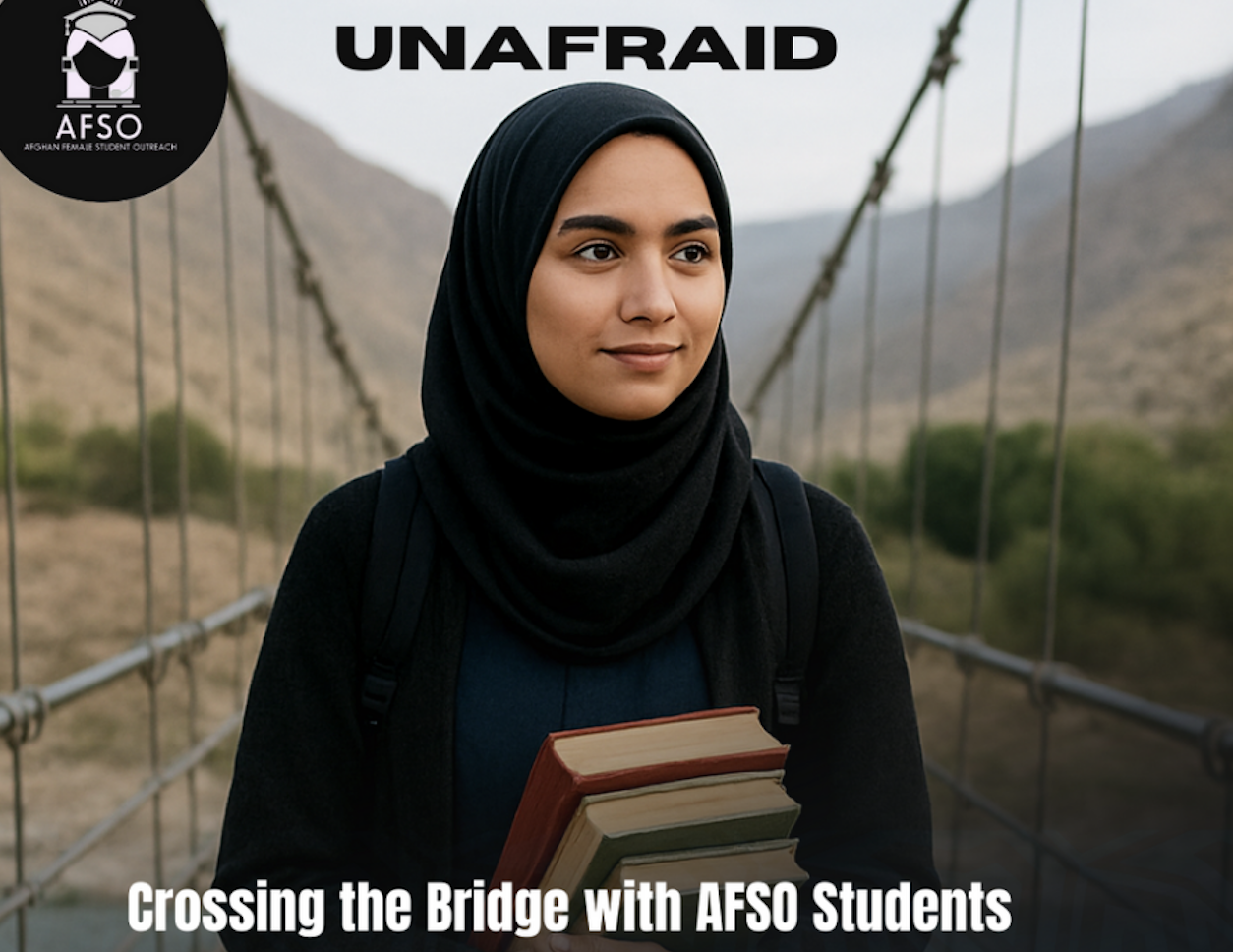
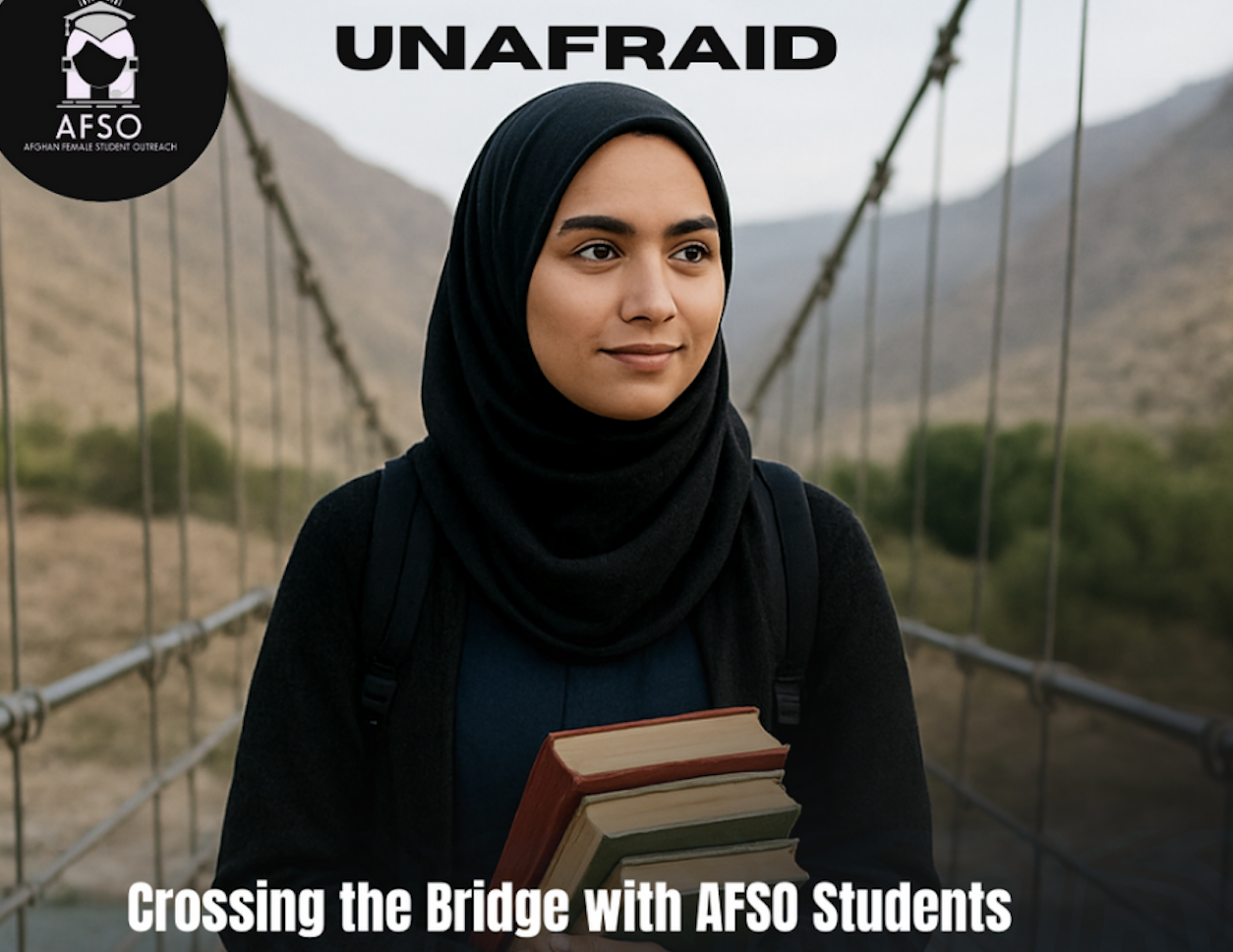
Last week I was prepping my creative nonfiction class at Fairfield University, which has a community-engaged component where the class works with young women in Afghanistan through the Afghan Female Student Outreach organization. I teach a separate online class through AFSO as a volunteer that covers much of a same material in my Fairfield class, and then my students in each class get to know each other and read each others’ writing. This is my fourth semester offering an AFSO class, and it’s amazing. (If you’re a professor and would like to get involved, let me know! And if you’d like to donate $37 to support one student’s data package to allow her to take a class, you can do that here.)
In our second week of class, the Taliban managed to cut fiber-optic service nationwide, causing a full internet blackout. I thought about these brave students, each in their homes, each having already weathered so much since they were systematically eliminated from public and intellectual life in 2022. People have viewed this cut, and the global outrage that resulted, as either a victory for the forces of access or as a warning for what the Taliban may still do in the future.
Increasingly, I feel like AFSO is a kind of mutual aid, rather than the world doing something charitable for Afghan women. Through this process I am learning about strategies that we might use when our government makes war on us, limits our access to education and connection. Accumulating these tools, and building a global network of educators, feels like building an action-oriented community. From the Afghan women I learn every day how one might continue to live and seek connection. They are not two-dimensional heroes; they’re people like us, who in the face of cruelty have all the expected trauma and mental health crises. This teaching and learning is, for me, always interwoven with how to teach writing in a trauma-informed way.
Even democracies enact cruelty on their citizens, usually empowered by backlash forces that seek to roll back basic rights. We, of course, are living this right now in the United States, watching as our democracy is dismantled as those far-right men would rather roll back science, take webpages down, purge knowledge, and repeal advancement than to have to share power. But people are fighting back.
People across the country are being traumatized by the violence of the state unleashed on its citizens, on innocent people. “Democracy is deeply related to the healing and prevention of trauma,” writes Jonathan Shay in the book Odysseus in America: Combat Trauma and the Trials of Homecoming. “Prevention is intrinsic to the goals of our own polity and of any future world polity based on democracy.”
Shay writes, “If either safety or struggle is lost, democratic process ceases.” For many who are now imprisoned by ICE in the US, all safety has been lost. Shay comes to this question, among many about Odysseus, through his work as a psychiatric doctor at the Veterans’ Administration, another agency now being injured and dishonored by the current administration.
I had started on the road to reading about Odysseus because I’ve been circling around one of the last plays of Sophocles, Philoctetes, about a disabled veteran left by his fellow soldiers on an island for ten years. Its depiction of disability and chronic pain then led into a bunch of scholarly books and articles about ancient Greek drama.
Shay describes the steps to healing: “Healing requires voice. The circle of communalization of trauma, which is essential to the healing of trauma, is much aided by the arts. Prevention of trauma lies squarely in the realm of justice, ethics, and recognition of one another’s humanness, recognition that we are in this together and part of one another’s future.” In other words, I think, everything we do to recognize one another’s humanness in this time matters. I’ve had as much overwhelm as anyone else, wondering whether anything I do might help in a small way to break this terrible attack raining down on the U.S. from inside the U.S. Shay reminds us that we are part of the counter-balancing force.
Complex PTSD, writes Shay, is sometimes described as a condition where “social trust” is lost, which is the trust that “power will be used in accordance with what’s right.” By this metric, many of us in marginalized communities already have seen that trust broken over the past decades, and many more of us are seeing and experiencing this shattering of social trust for the first time. When that goes, what takes its place can be “a perpetual mobilization to fend off attack, humiliation, or exploitation, and to figure out other people’s trickery.” This sentence, written before 2002, seems to perfectly describe our present government and its state of being at war with its own populace, agitated by its own paranoia into a state of violence and vengeance, as Odysseus did when he returned home and conducted mass slaughter of citizens.
Incredibly, the young women of AFSO do not seem to have lost social trust in the face of the trauma of violence and being confined to their homes, of having their futures ripped out from under them. The path to maintaining social trust seems to be to throw one’s self hard into community, into finding people one can trust. Even in this state of violation, they show up and email and try, as the people in Chicago are showing up and organizing in democratic ways that help fight ICE, and that also, in their process of human interaction, are saving people’s psyches.
What I’m trying to say, I think, is not only that organizing might win and tip the scales, but also that when it is done in a democratic way that centers humanity, the process itself keeps trust alive. So even if we lose, we win. But we will win.